6 Must Visit Photography Locations in Newfoundland
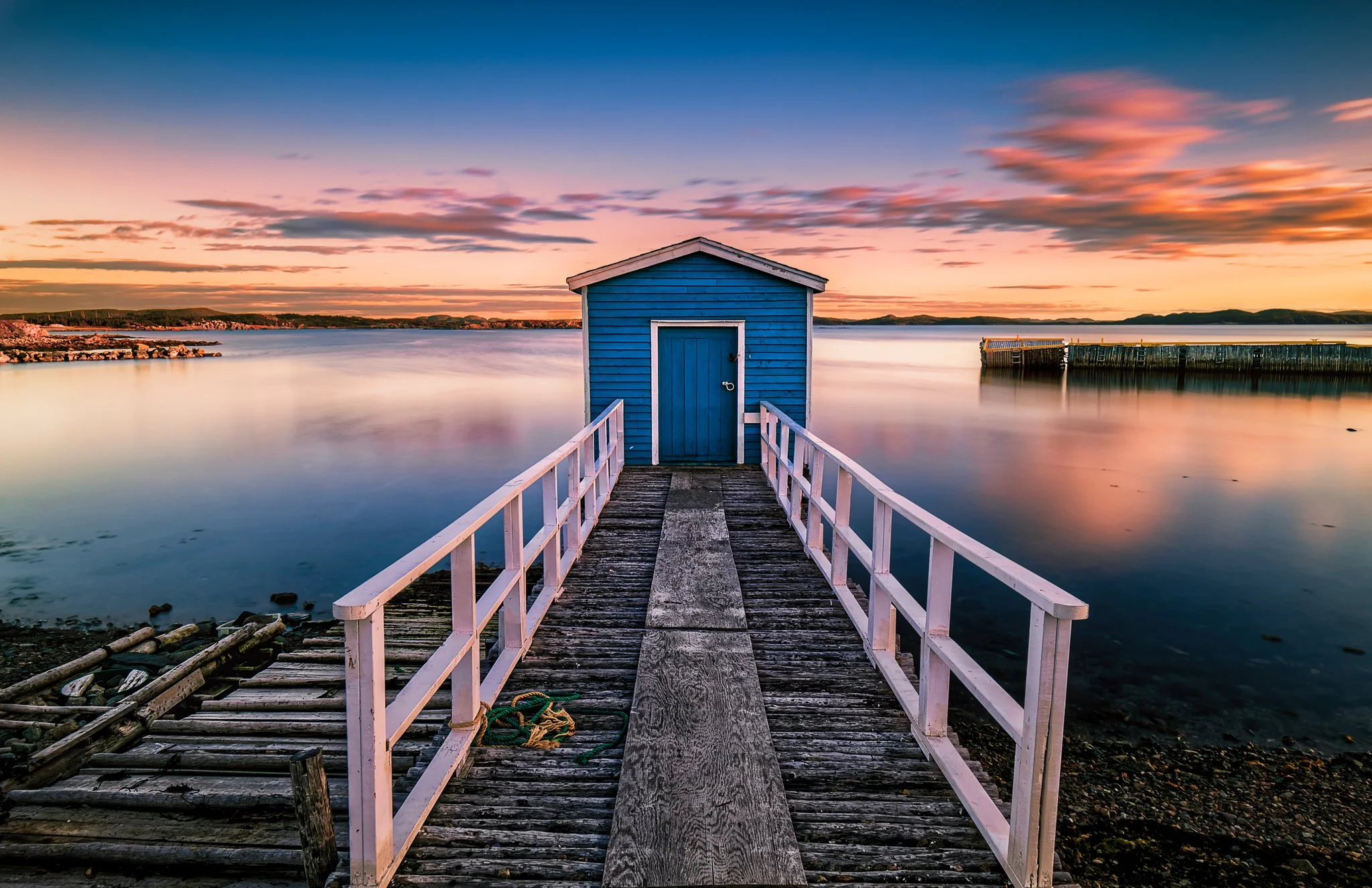
Available in Print
Newfoundland has no shortage of places to photograph. Some locations consistently stand out more than others. These locations offer strong compositions and enough variety that you can return multiple times and still come away with something different. Whether you’re into Newfoundland landscape photography, seascapes, outport scenes, or iceberg photography, these are the kinds of locations that make it easier to walk away with strong images.
There are a few spots I keep going back to. They’re spread out across the island, from the Avalon Peninsula all the way to the west coast. All of them are worth the stop if you’re in the area. If you’re planning a trip or just looking for new places to explore, these locations are a solid starting point.
Chance Cove
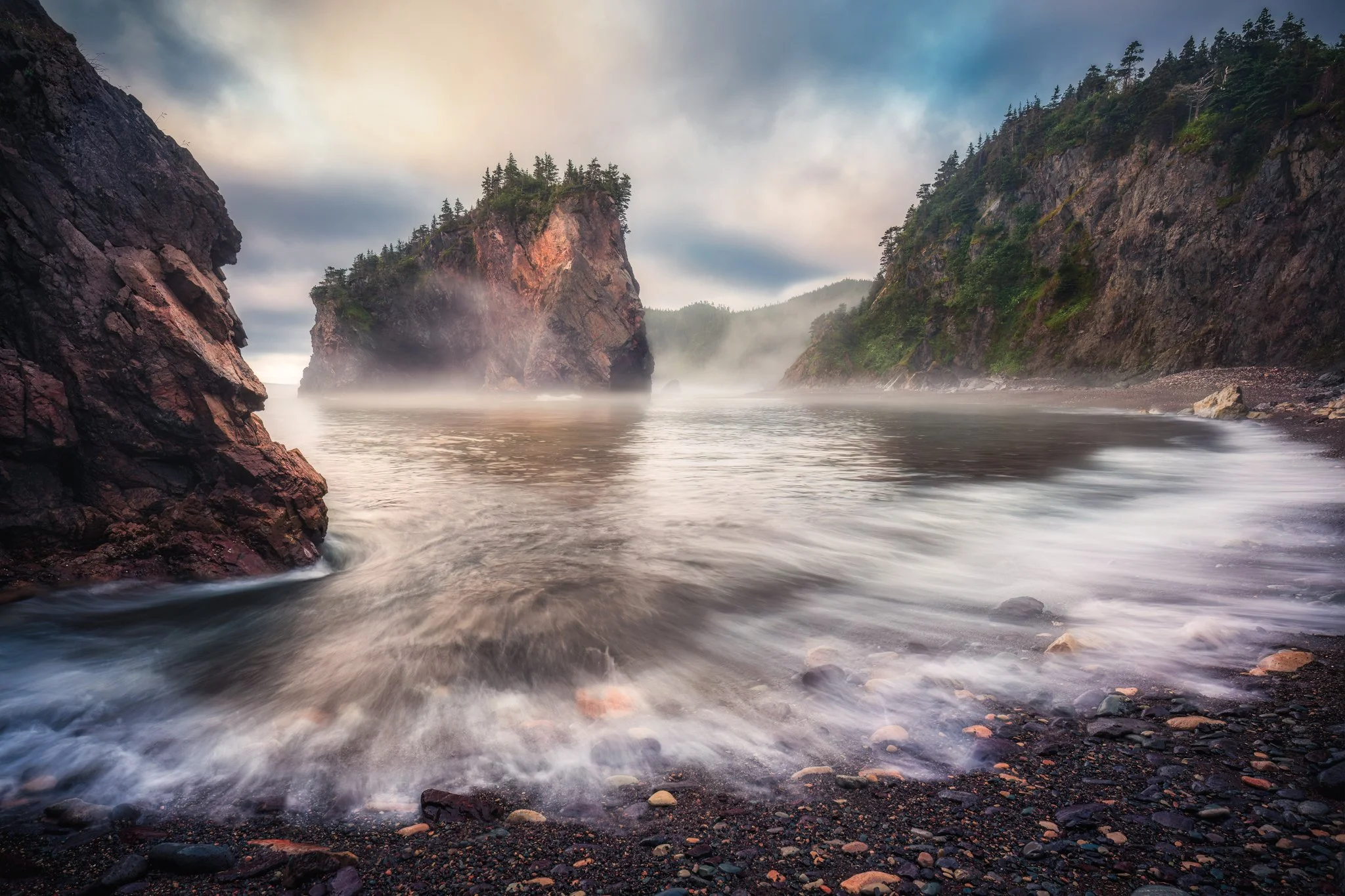
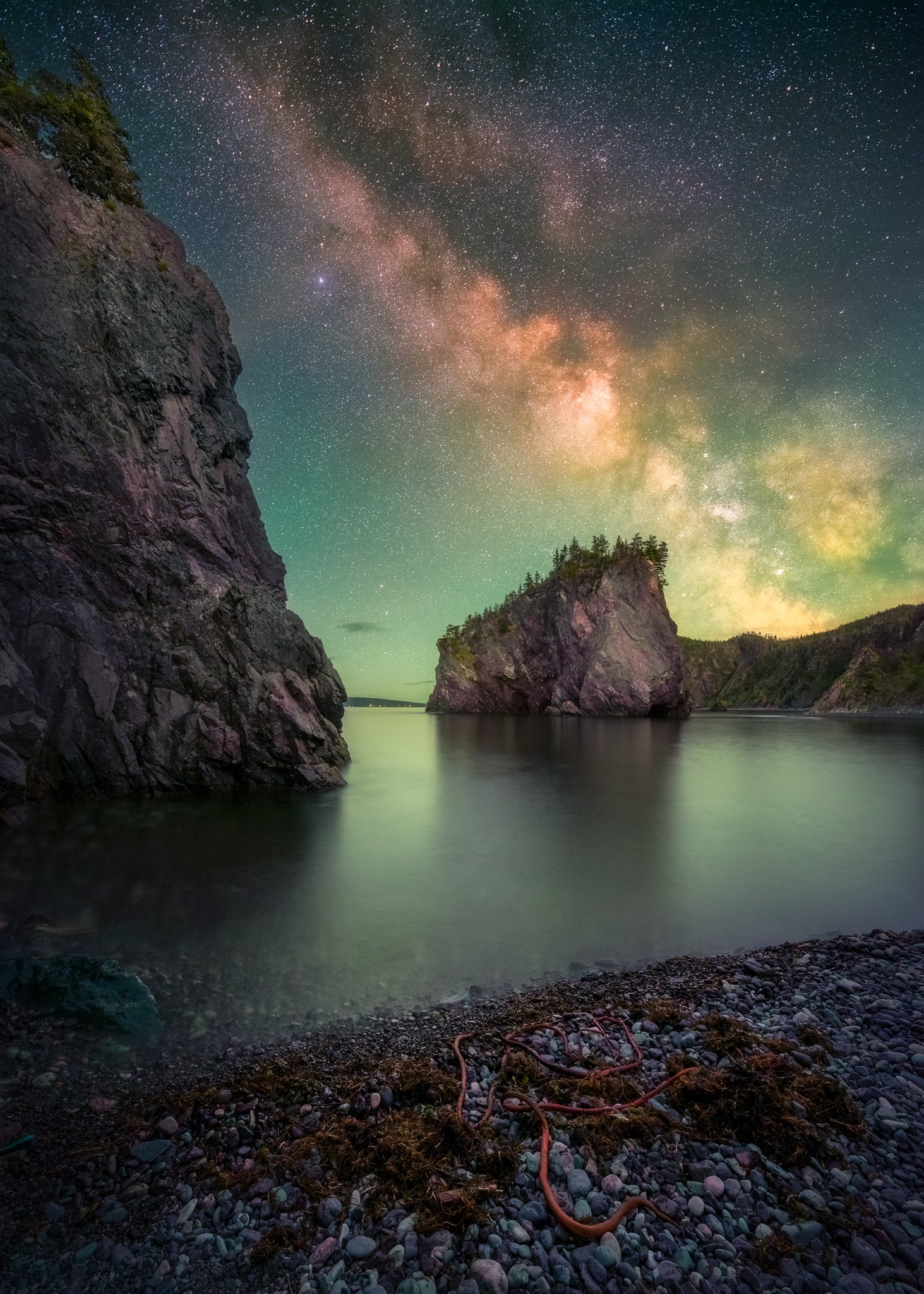
Chance Cove is located near Bellevue Beach on the Avalon Peninsula. There is a trail that will take you to two beautiful sea stacks. You can park here at the start of the trail. The trail leads you out along the cliffs before opening up to views of two sea stacks, each sitting off their own beach.
The area works just as well in blue hour or twilight when things are softer and quieter. On clear nights, it’s also a strong spot for Milky Way photography, with the second stack giving you a solid foreground to build around.
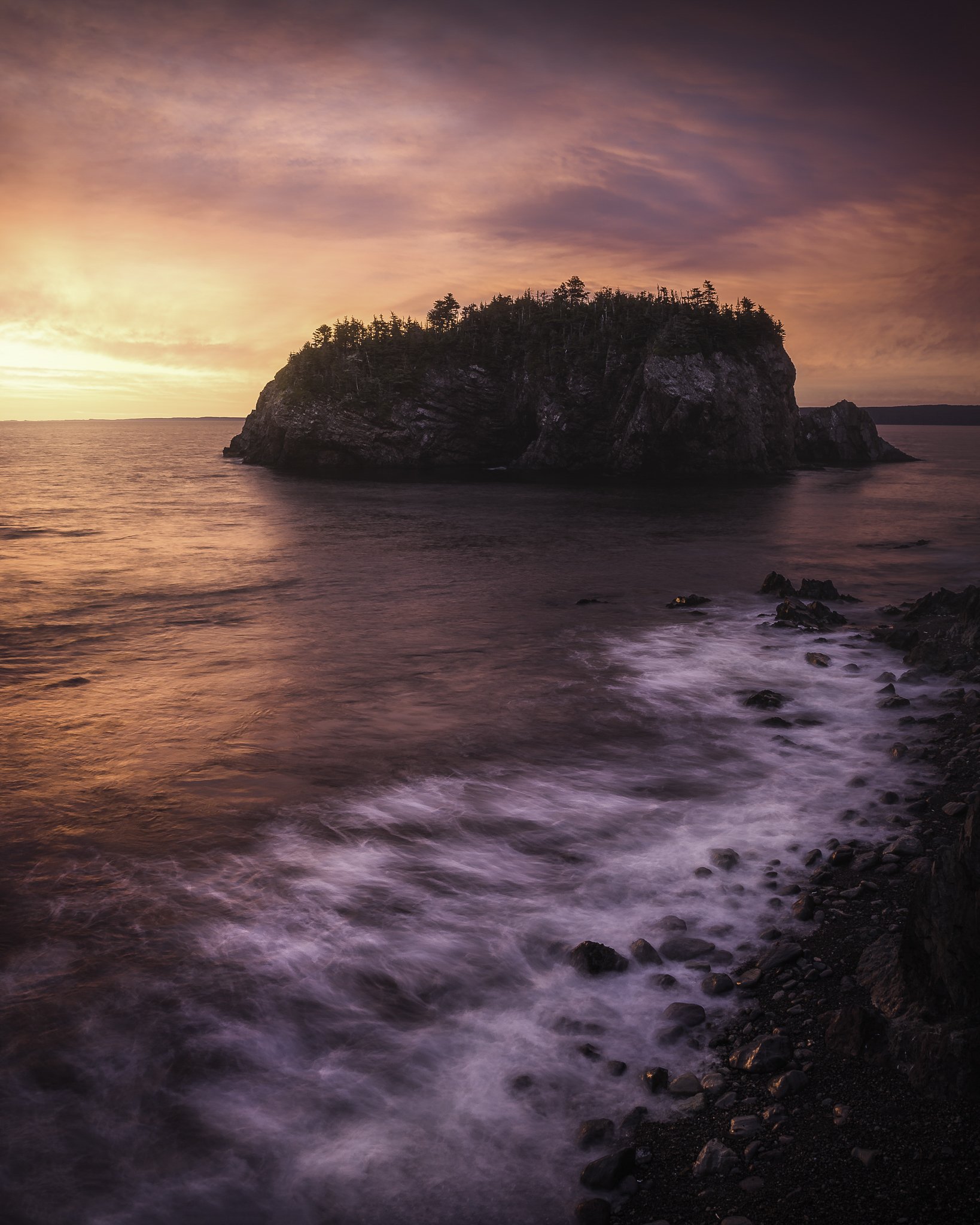
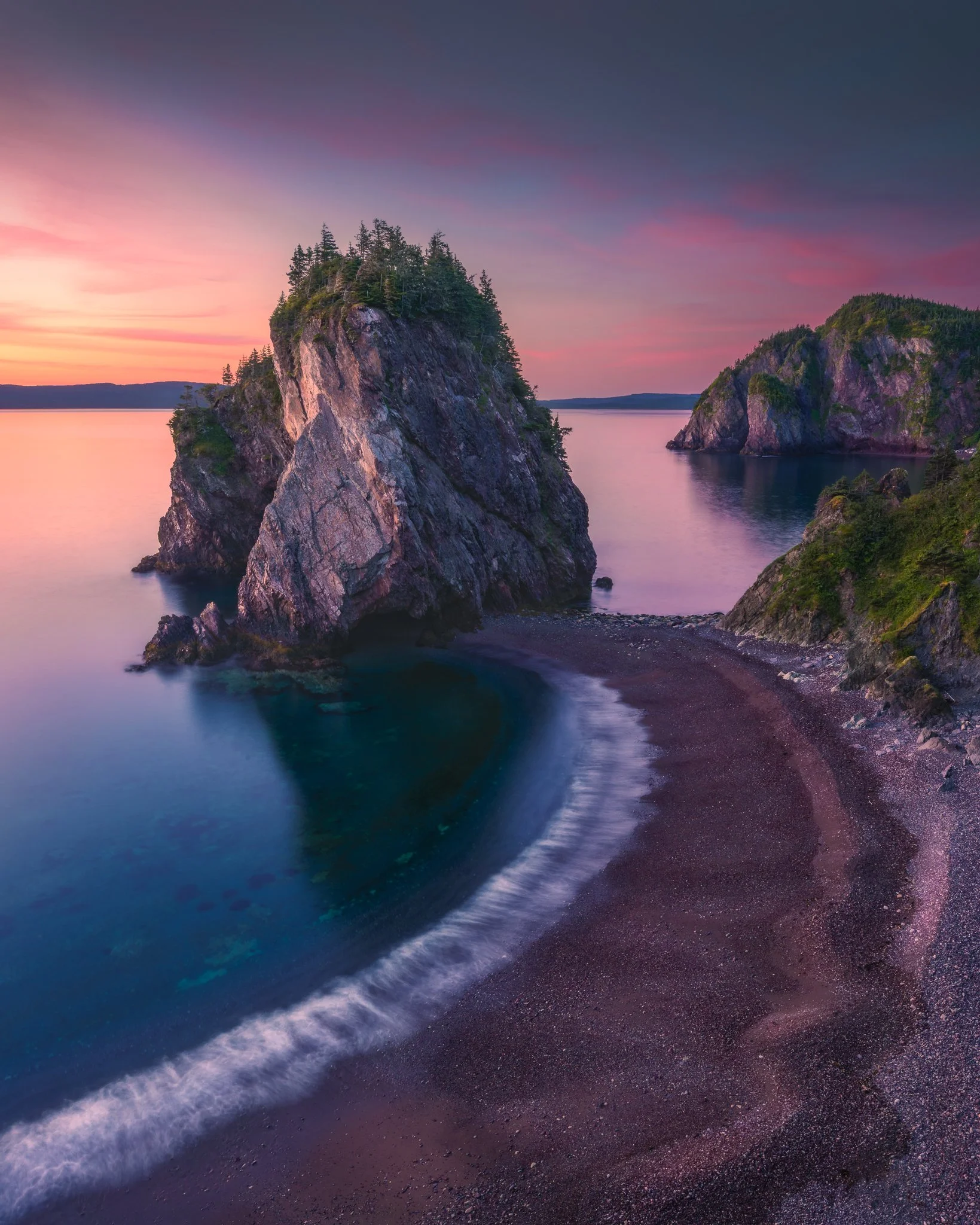
It’s primarily a sunrise location as both stacks line up well with sunrise light.
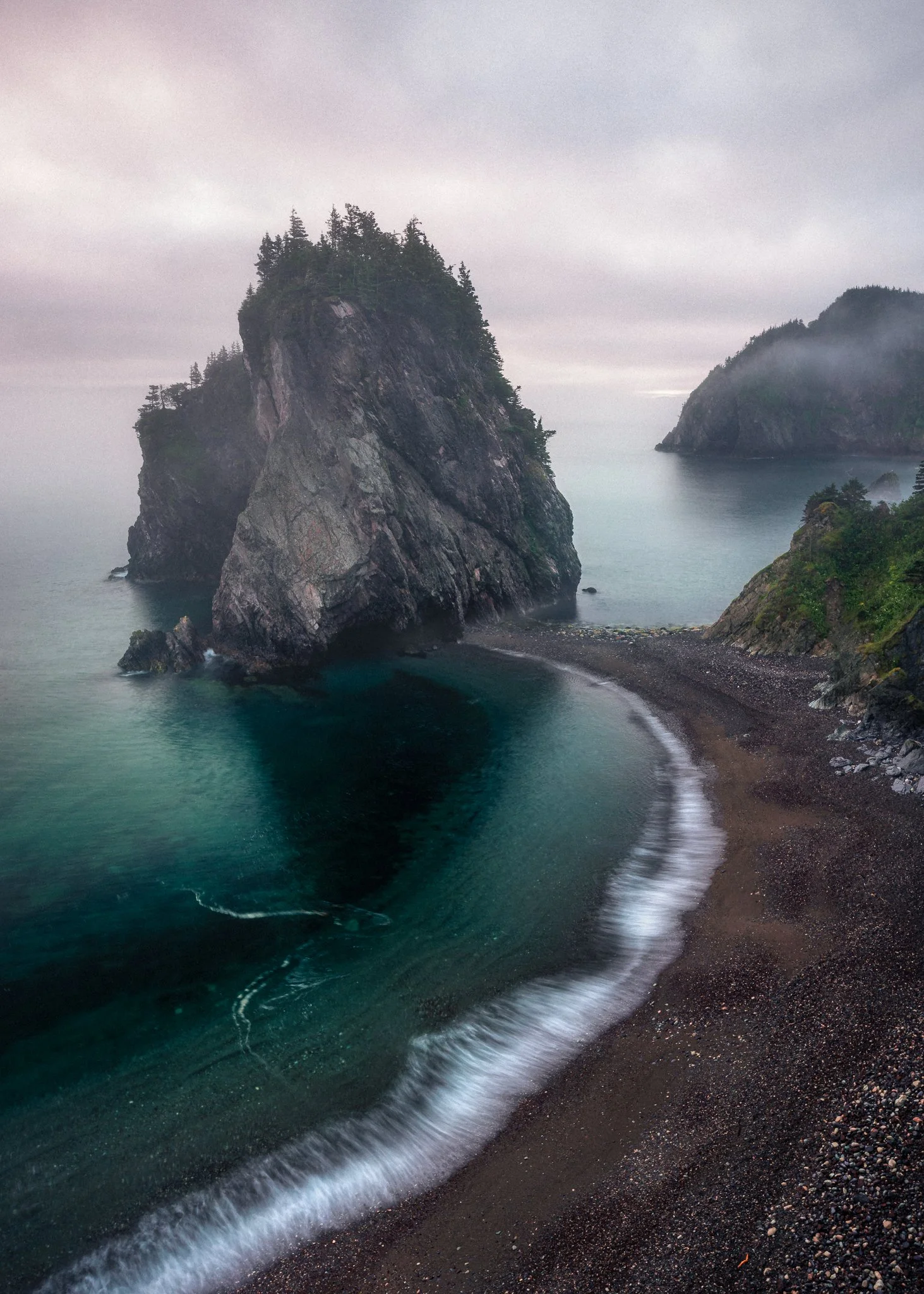
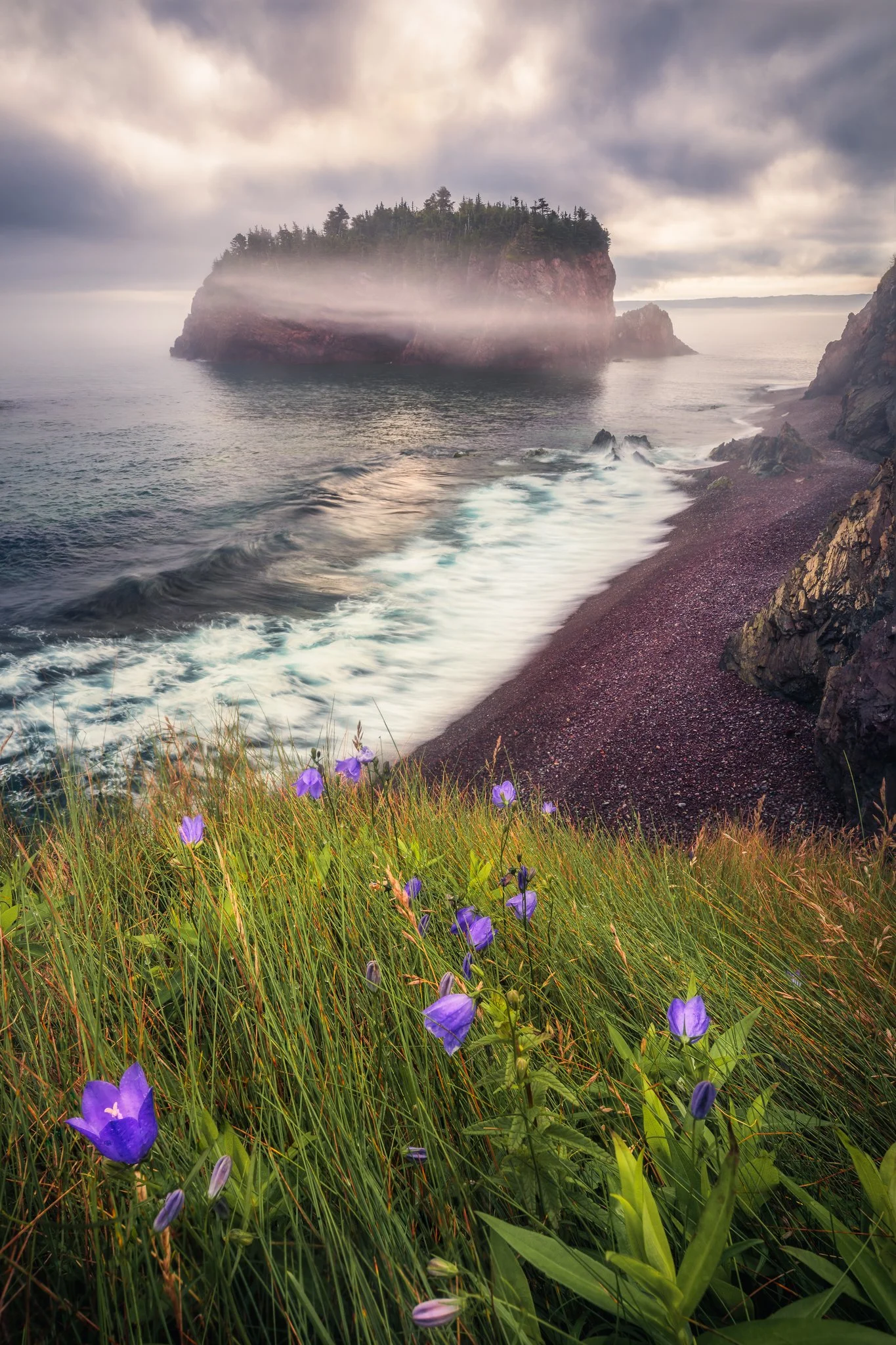
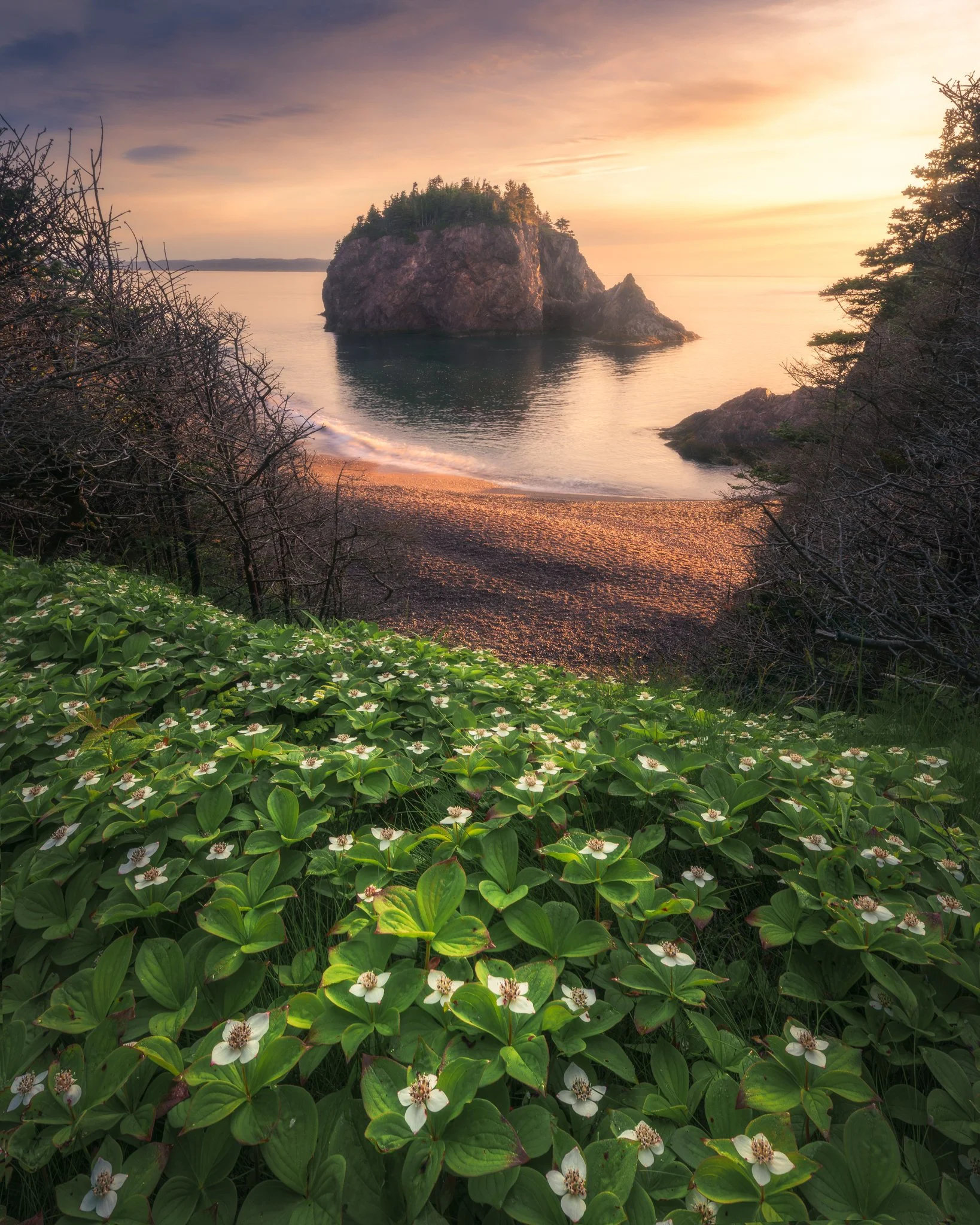
What really makes this place stand out is how it changes with conditions. Fog and low lying mist can settle along the coastline in the mornings, softening everything and simplifying the scene.
In mid-June through mid-July, the cliffs and foreground fill in with greenery and wildflowers. One of the sea stacks is accessed by a set of stairs down to the beach, while the second has had rope access in the past and is currently closed off, with the possibility of stairs being added. Even without going down, there are several strong viewpoints from above. In many cases, those higher angles give you the better composition.
This is one of my favourite locations over the years. It is one of those places that will keep you coming back for more.
Bottle Cove
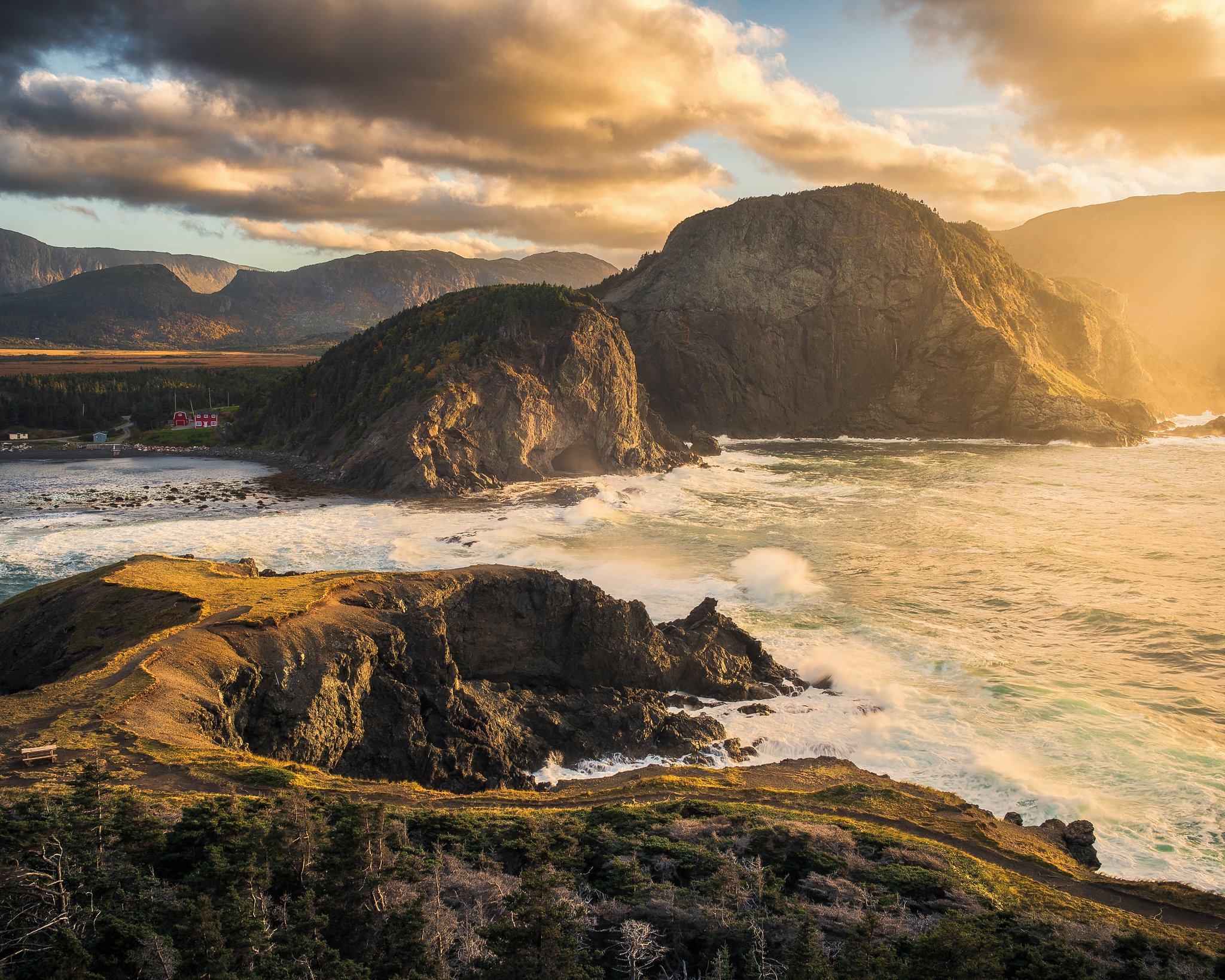
Bottle Cove, on the west coast near Lark Harbour, has a completely different feel from most spots on the Avalon. The cove wraps in tight, with a path leading around some cliffs looking toward hills and mountains on the other side.
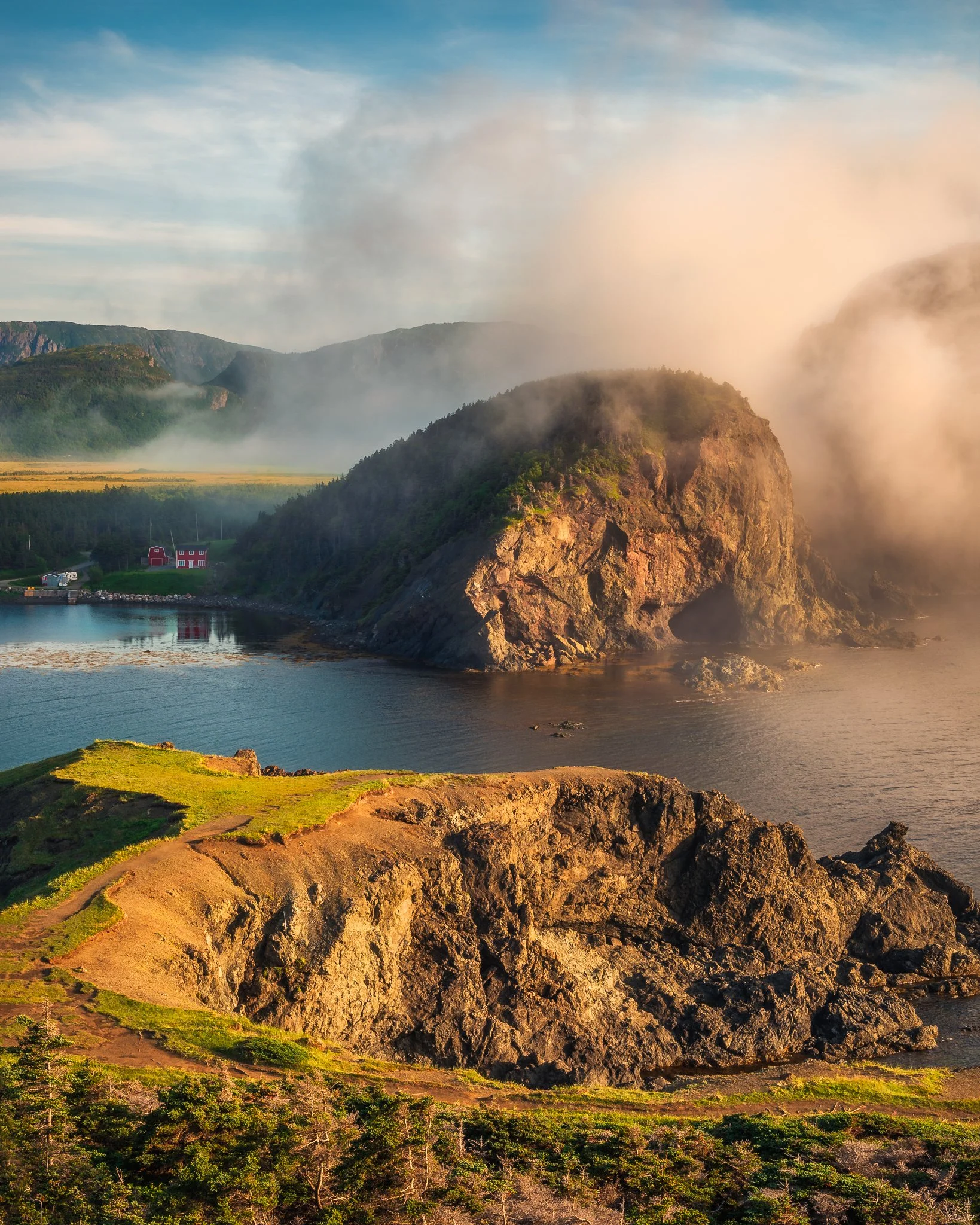
There’s a lot of potential foregrounds here with rocks, rolling surf, and layers of coastline that catch the light differently as the evening sets in. It’s a place that really opens up once you start moving around and working different angles for Newfoundland coastal photography.
This is primarily a sunset location. The light tends to sweep across the cliffs, sea and hills, picking up warm tones. On the right evening you might get lucky with a bit of mist hanging along the shoreline.
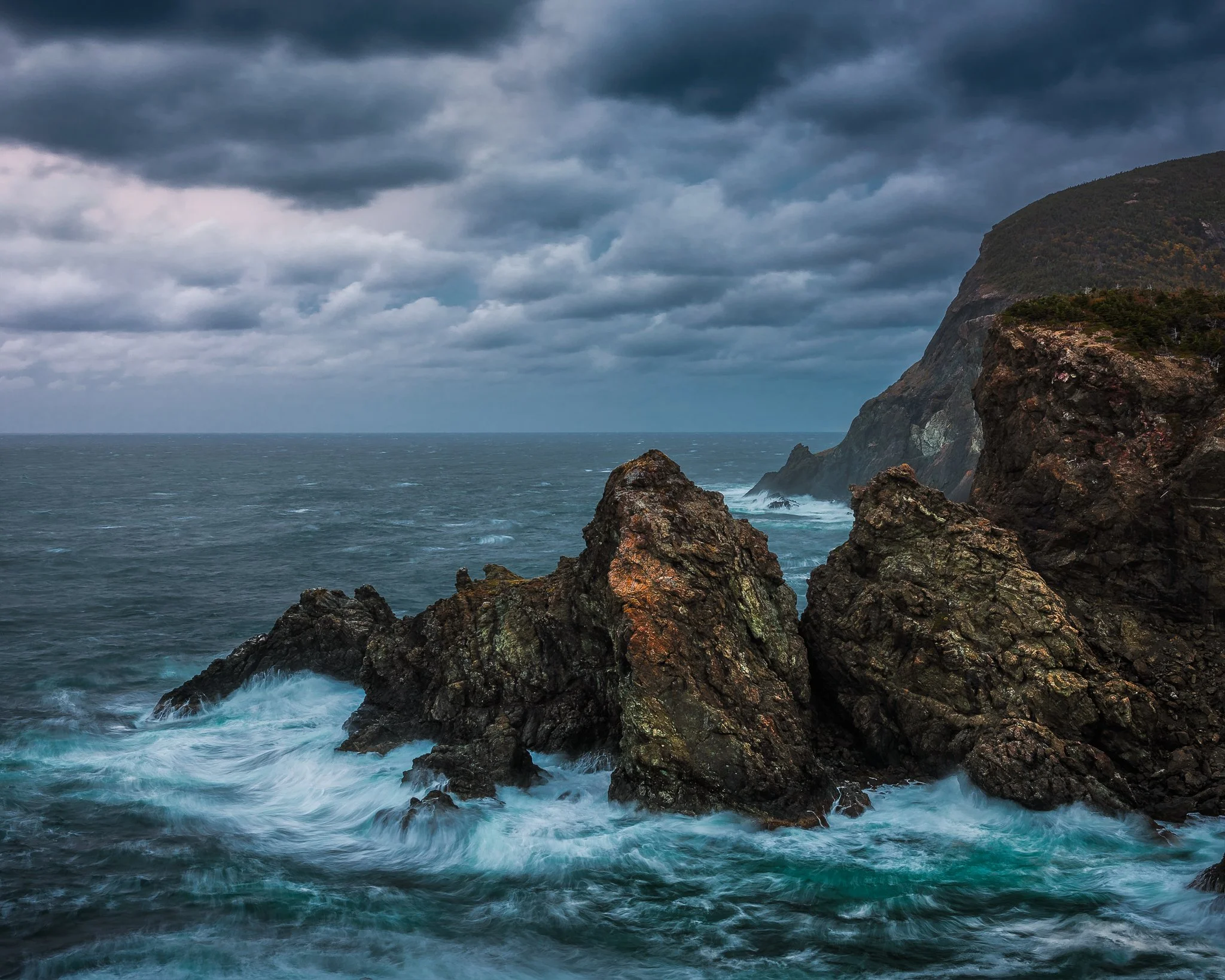
Get up high and you will see a coastline that makes a great scene on a stormy day.
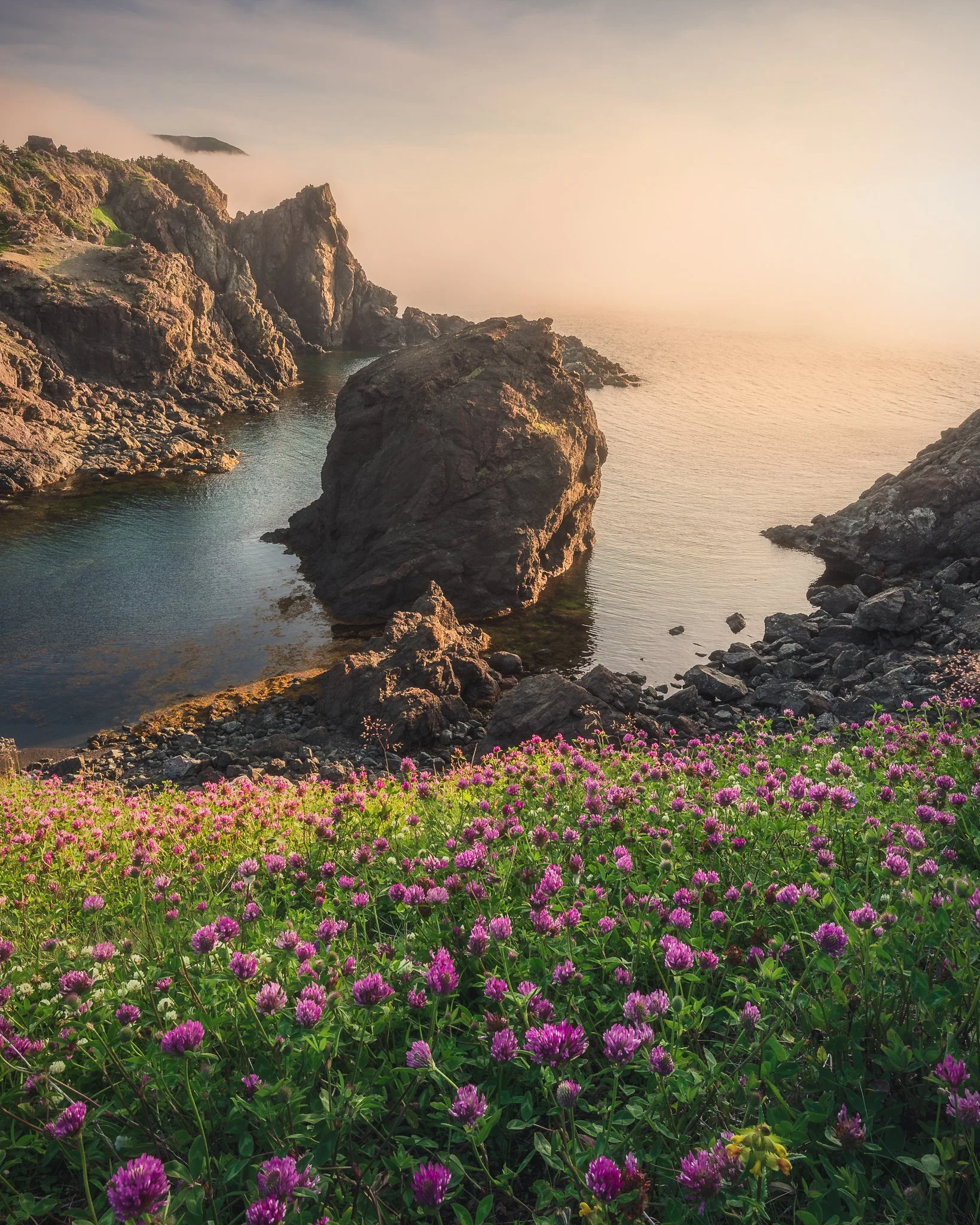
Not far from the cove you will find a sea stack leading down to the beach which makes for an interesting subject.
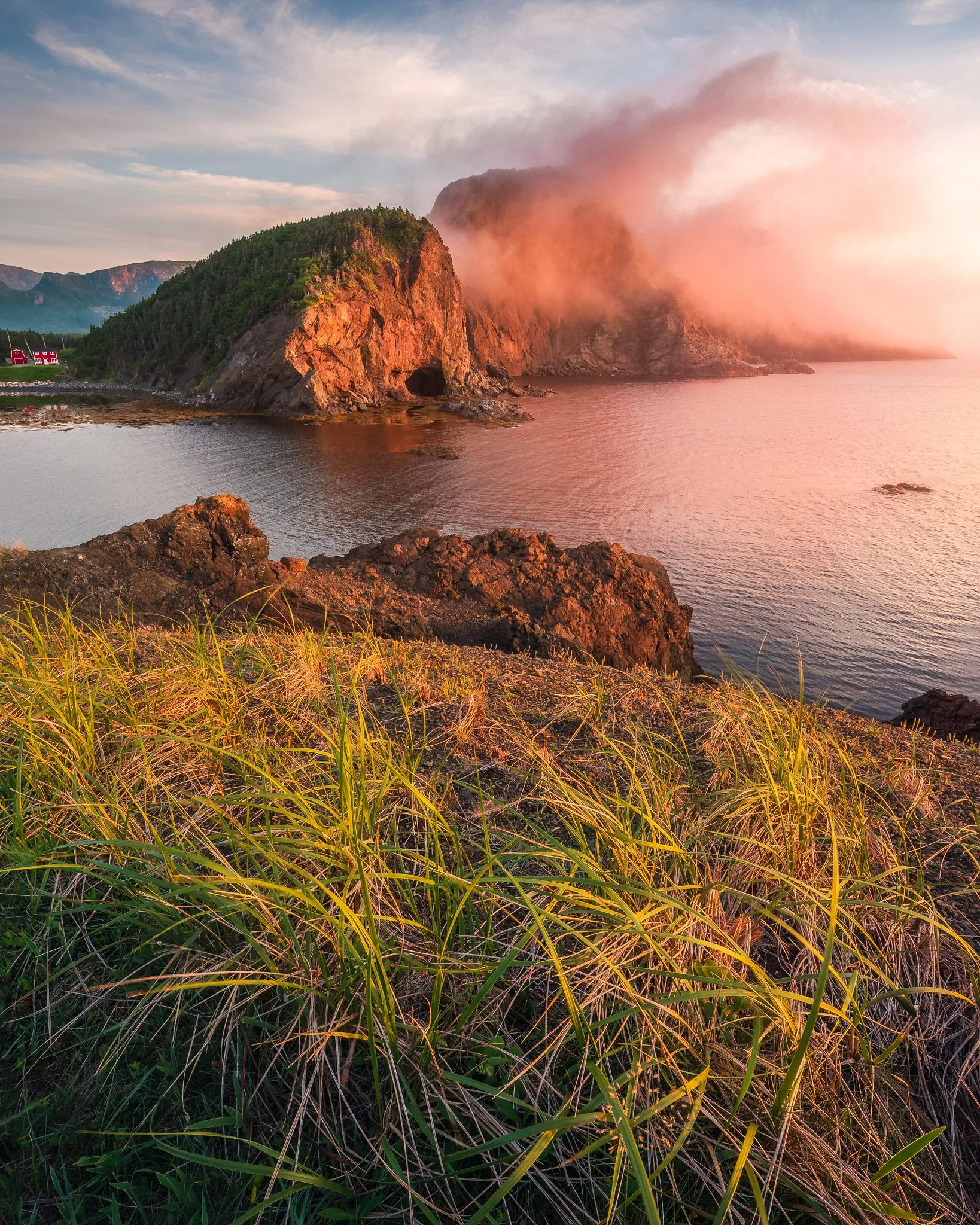
When conditions line up, you can get everything from soft pastel skies to more dramatic, stormy Newfoundland seascapes with movement in the water. There’s no shortage of foreground options such as grasses, flowers in early summer, textured rock, waves and a pathway to help fill out your frame.
On clear nights, it has the potential to be a strong Milky Way location, even though that’s something I haven’t had the chance to do yet.
Cable John Cove
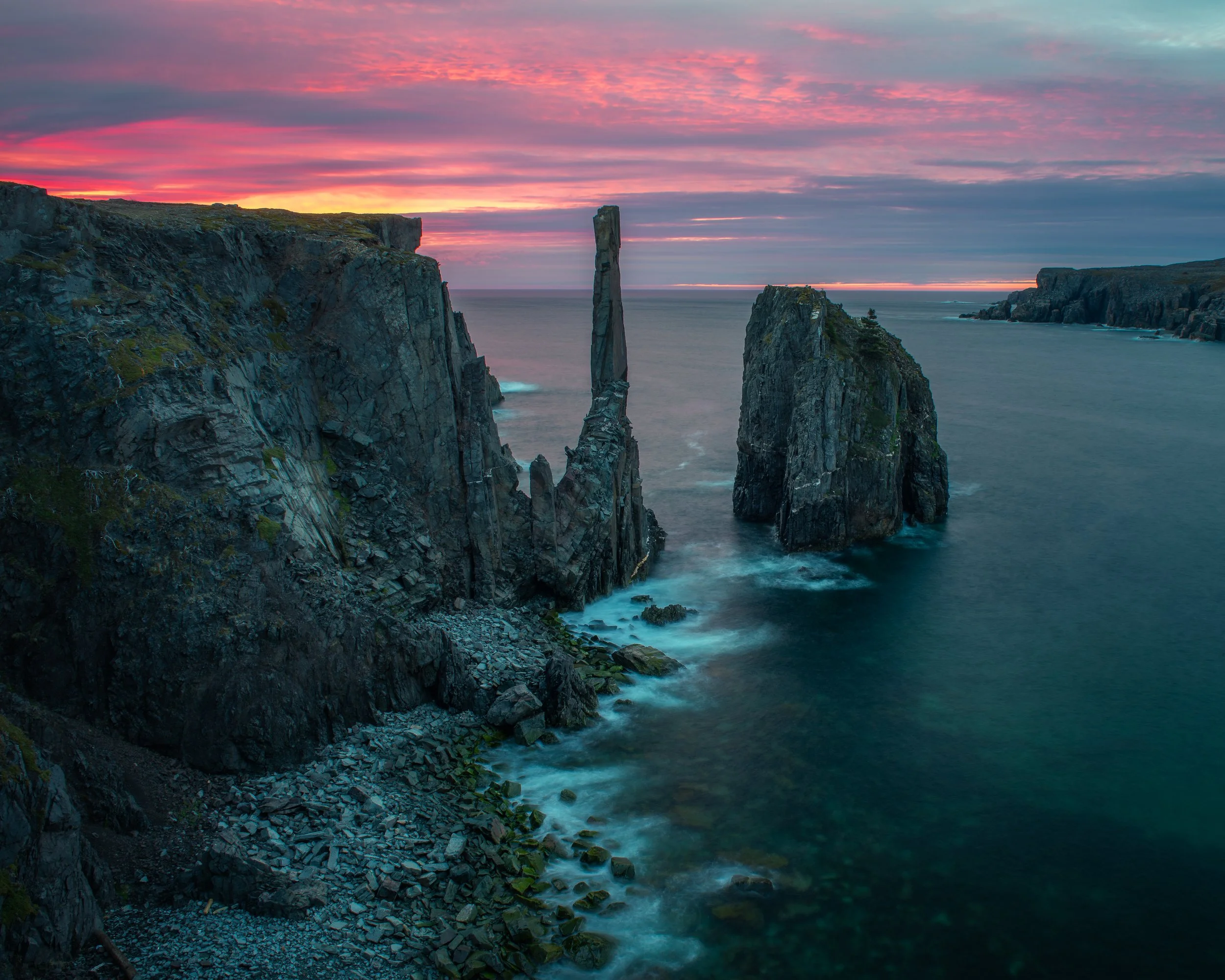
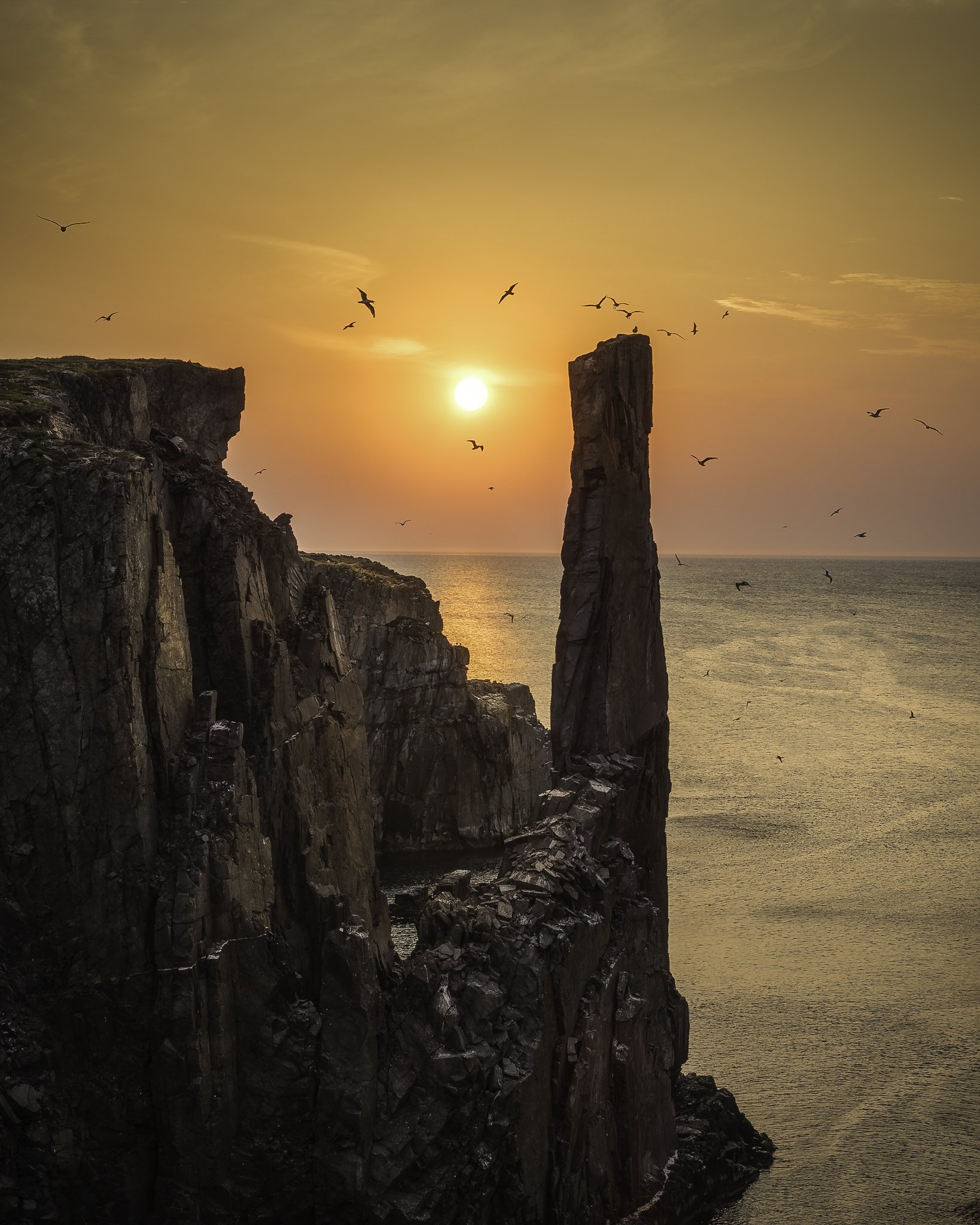
Cable John Cove, on the Bonavista Peninsula near the community of Spillars Cove, has some of the most spectacular coastlines in Newfoundland. Park here and follow a short trail that takes you to the Cove. As you get out along the cliffs and it just opens up to sheer drops, a narrow sea stack, and layers of rock that run straight out into the ocean. There’s a rugged look that defines Newfoundland landscape photography.
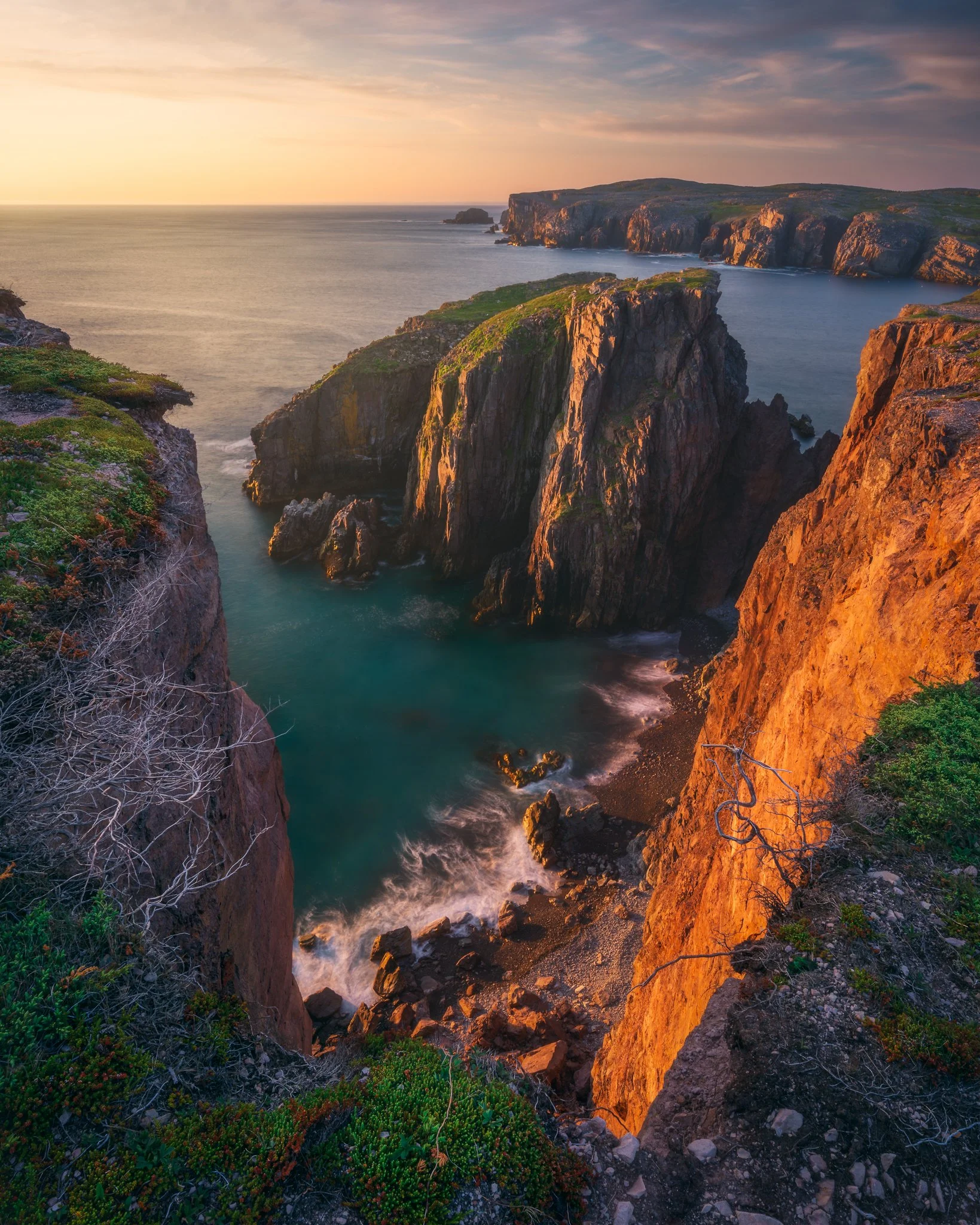
The coastline is broken and uneven, with no shortage of strong compositions. Most people are attracted to the Chimney sea stack. While this makes for a great subject, I recommend exploring the cove and beyond to find a multitude of compositions.
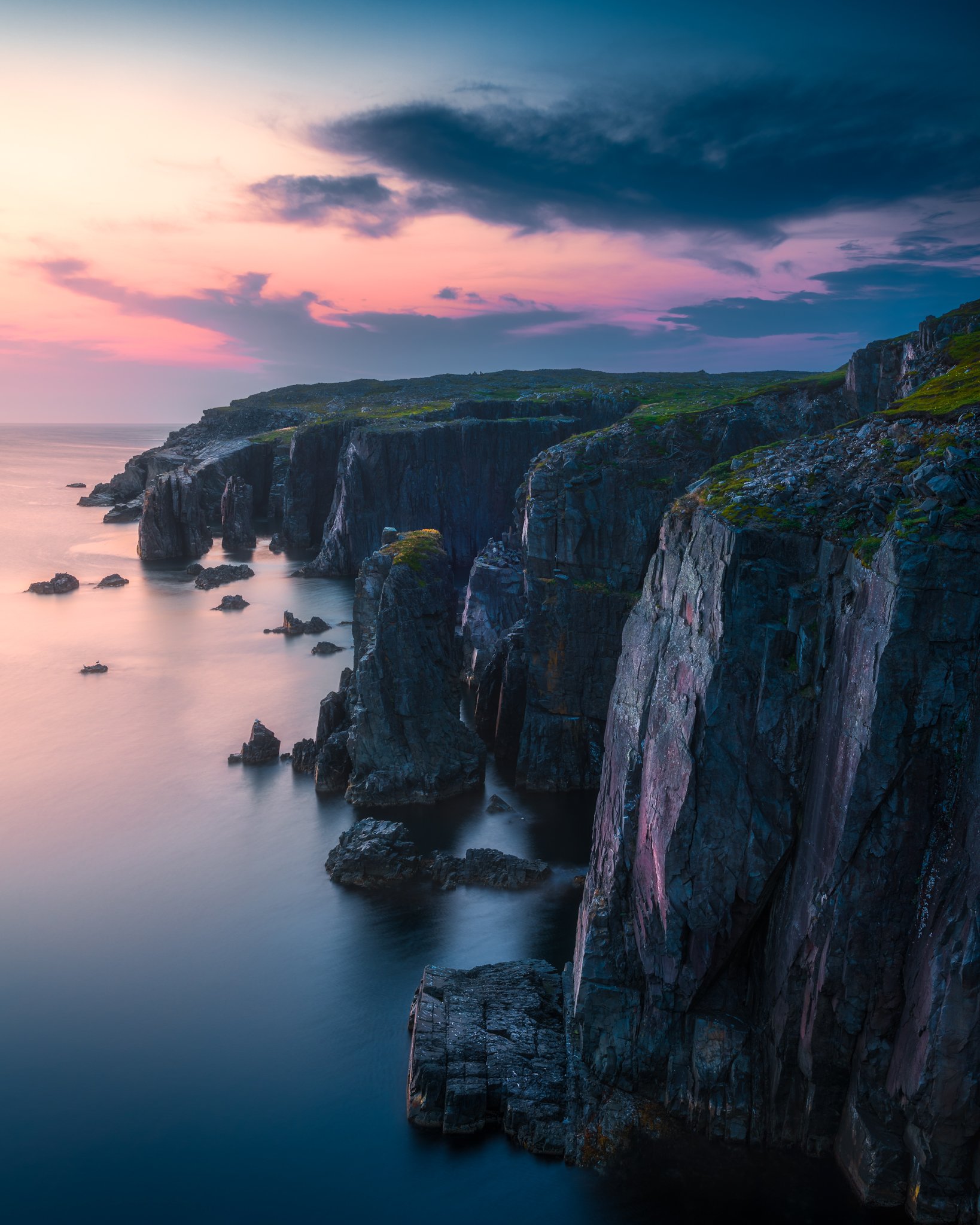
It’s the kind of place where you don’t have to force anything. Just move around a bit and the frames start to show themselves.
This is primarily a sunrise and blue hour location. Early light works its way across the cliffs and picks up the texture in the rock, while the water below stays soft and quiet. When conditions are calm, longer exposures smooth everything out and simplify the scene. It holds up just as well when there’s a bit of motion in the ocean.
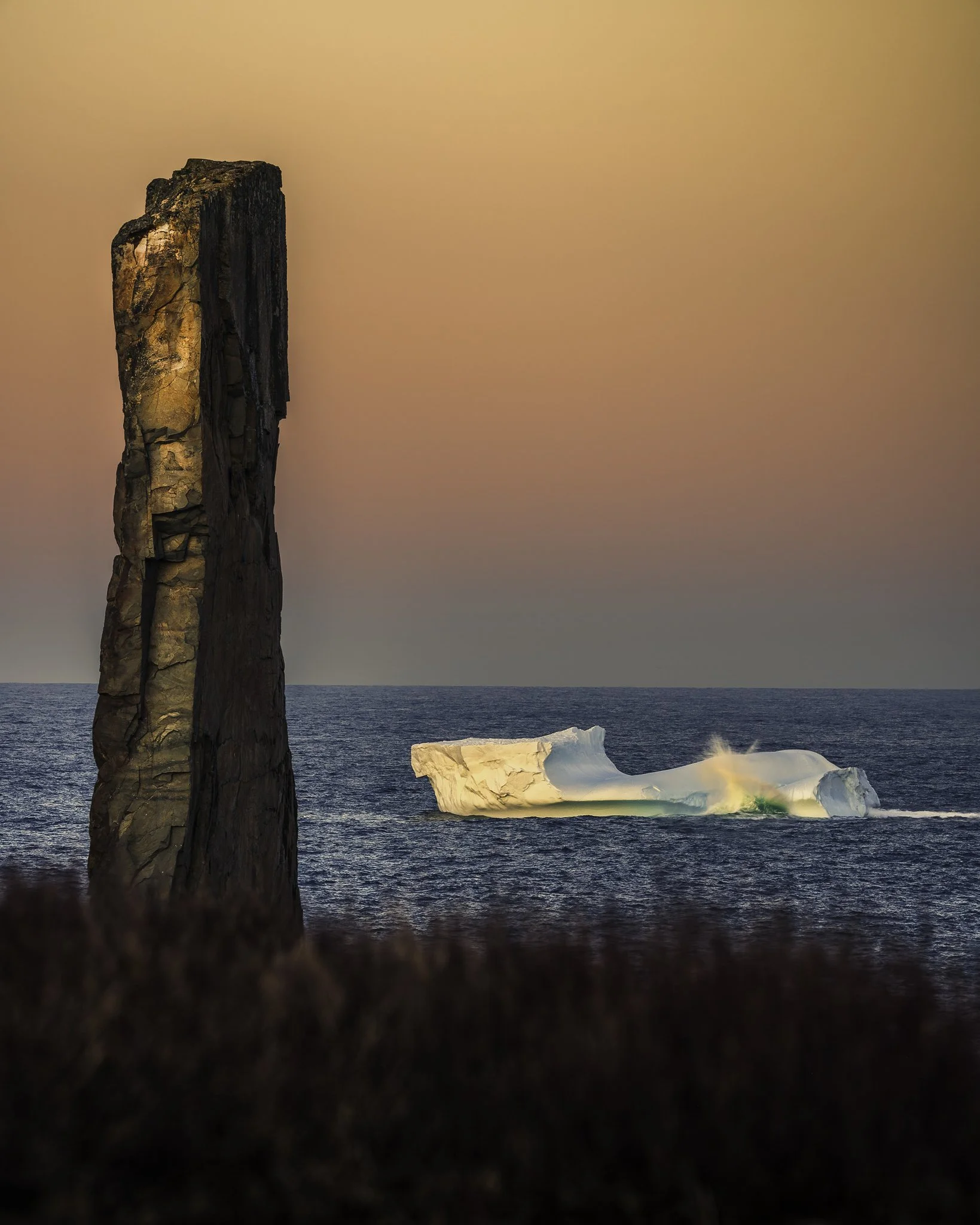
In the spring from April through June, icebergs can drift through and completely change the composition, adding another layer to an already amazing landscape. Even without them, this is a place that works best when you keep it simple and let the coastline do the work.
Bell Island
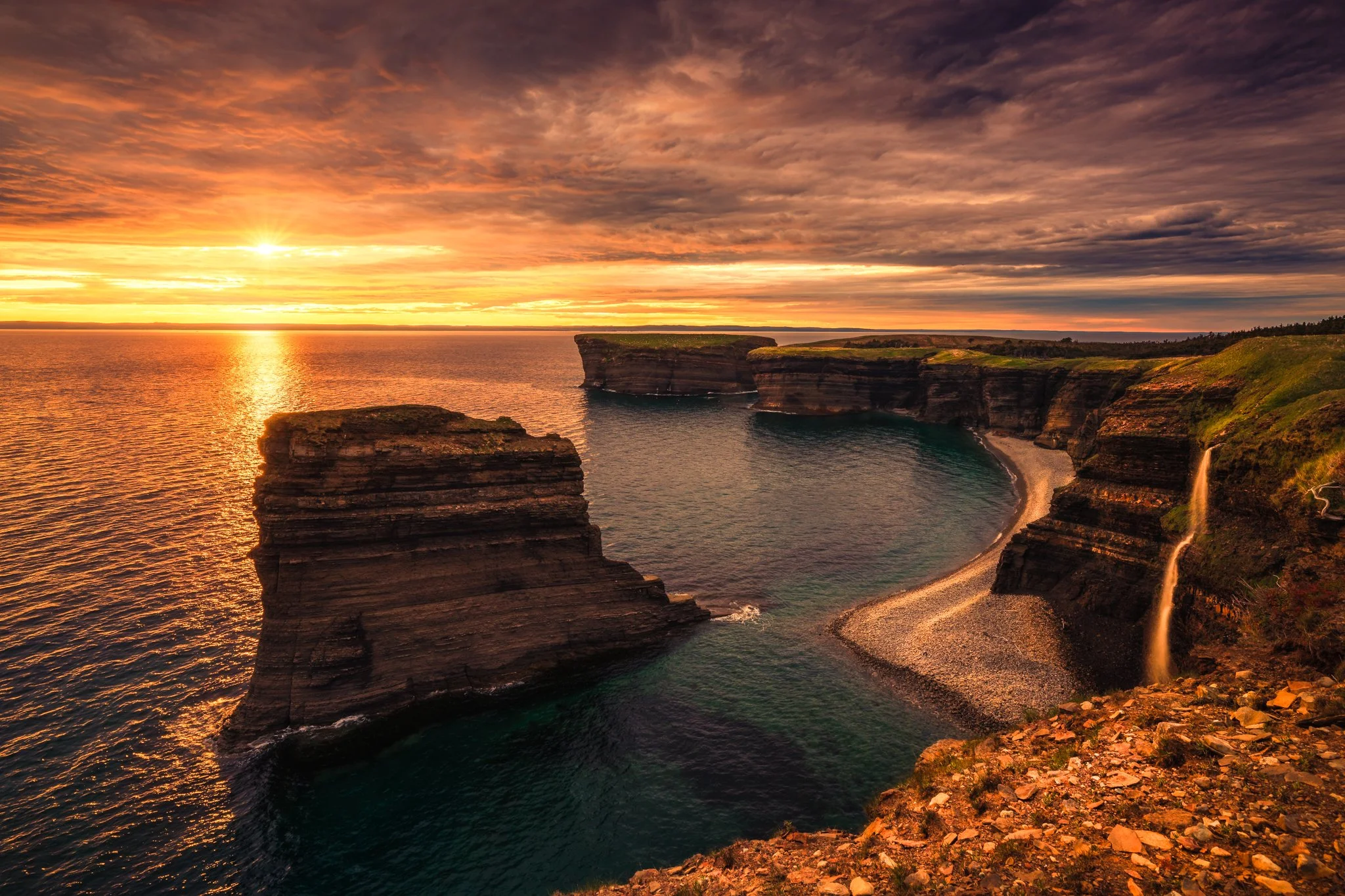
Bell Island is found in Conception Bay Newfoundland. You reach it by ferry from Portugal Cove Newfoundland. The Portugal Cove ferry is a short crossing that runs regularly and drops you right into a landscape that feels a bit removed from the mainland. Once you’re on the island, it doesn’t take long to find your way out to the cliffs. Most of the coastline is open and easy to explore, with walking paths and viewpoints that lead you along the edge. While working this area try to keep back from the edges as there are overhangs that can potentially collapse.
What stands out is the cliffs, layered rock, and long stretches of rugged coastline that have similar textures and tones as the Faroes Islands. There’s no shortage of compositions here which include, sea stacks rising out of the water, curved coves tucked into the cliffs, and wide views looking out across the bay which are ideal for dramatic Newfoundland coastal photography.
Two of my favourite locations on the Island are The Bell and Grebes Nest. Both locations are on the west side of the island looking toward the sunset.
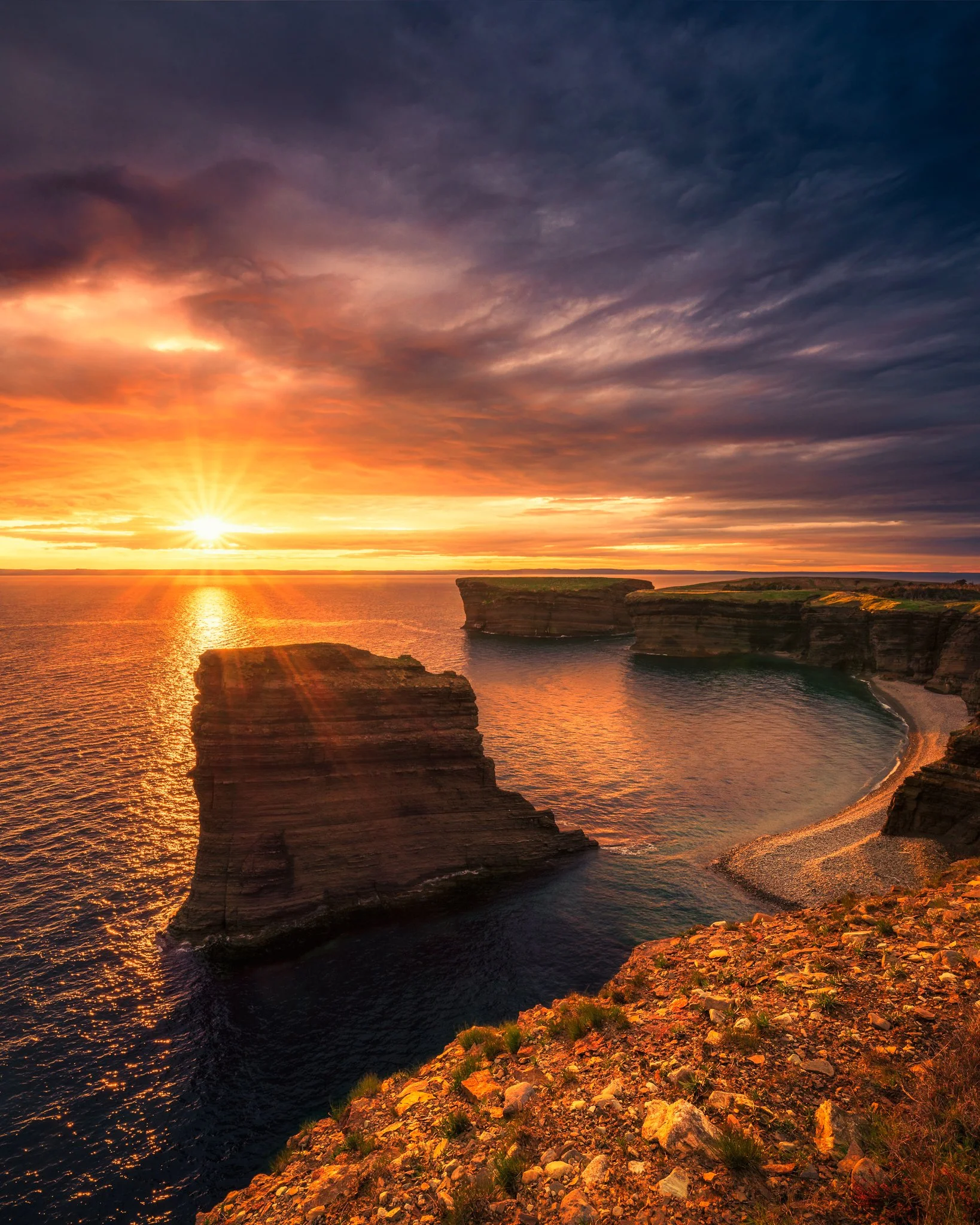
The Bell
Grebes Nest
To access the bell you need to follow a Trail along the coast for 15-20 minutes. Park here for the start of the trail. The Bell is easily one of the strongest compositions on Bell Island. You’re looking down on a massive sea stack sitting just offshore, with a curved cove and layered cliffs wrapping around it in the background. Everything lines up naturally. The edge of the cliff in the foreground, the stack as your main subject, and the coastline pulling your eye through the frame. This is a location you shoot from the top only. There’s no access down to the beach unless you have a boat. Your composition comes from working the cliff edge and adjusting your angle. When the light drops, it rakes across the rock and really brings out the texture, while the water picks up those warm tones and reflects them back into the scene. I can’t say enough about this location. One of my all time favourites!
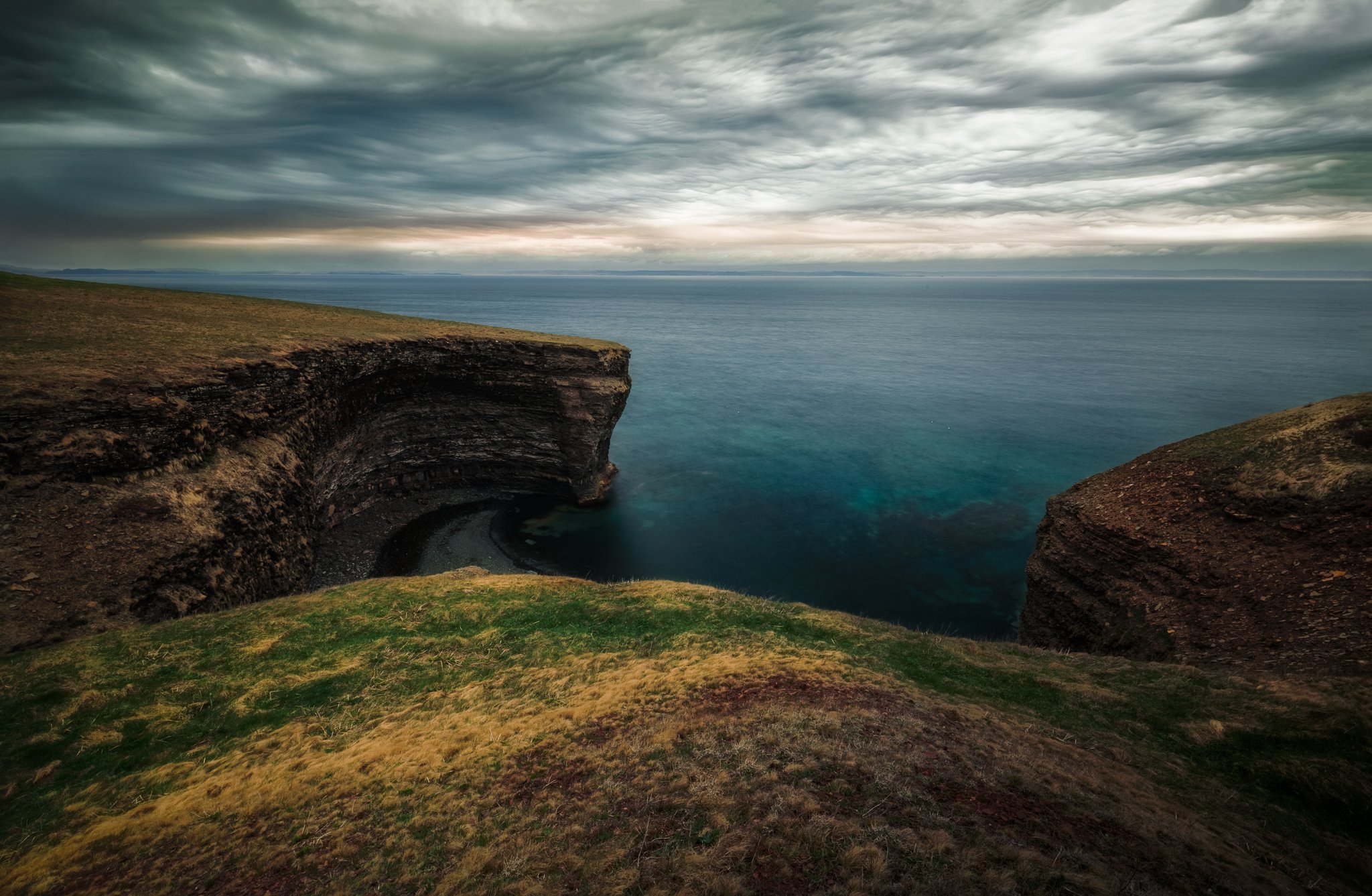
While the Bell is one of the best coastlines in Newfoundland, the Grebe’s Nest has more options for multiple compositions and subjects. Park near here and walk down the rocky road to the coast at the Grebes Nest. From above, you’re looking down into a tight, curved cove with steep cliffs wrapping around a pebble beach. The curve of the shoreline naturally pulls your eye through the frame, especially when you use the grass and edge of the cliff as a foreground. It’s a spot that really benefits from a bit of atmosphere or shifting light rather than a flat sky. When the light breaks through, like those rays cutting across the water in this photo, it adds just enough separation between the layers and brings the whole scene together.
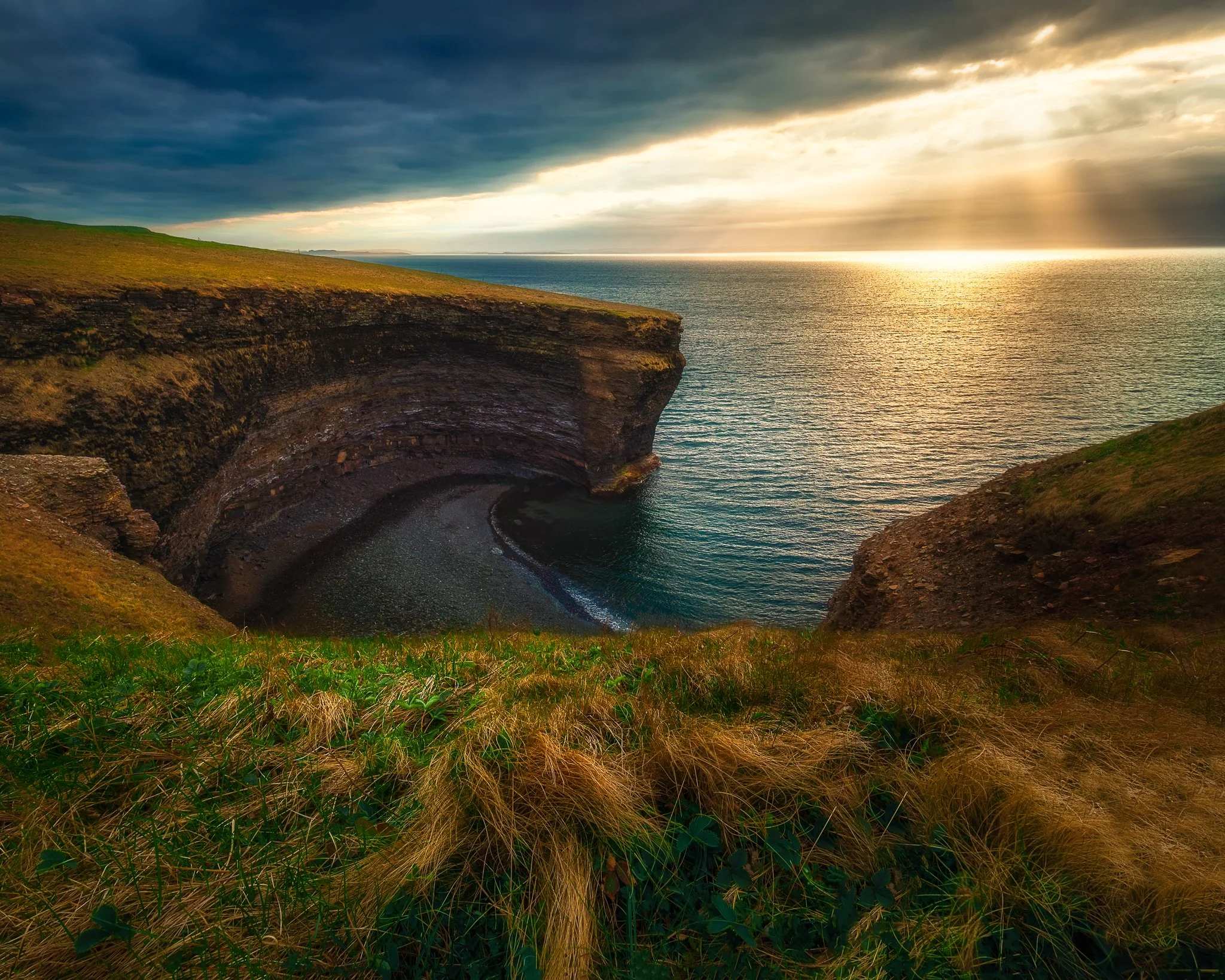
You can access the beach below through an old mining tunnel, which gives you a completely different perspective.
From the beach you can see a rocky sea stack which can work with wide scenes as waves roll in the cove or tighter compositions as the sunset light hits the stack and surrounding cliffs.
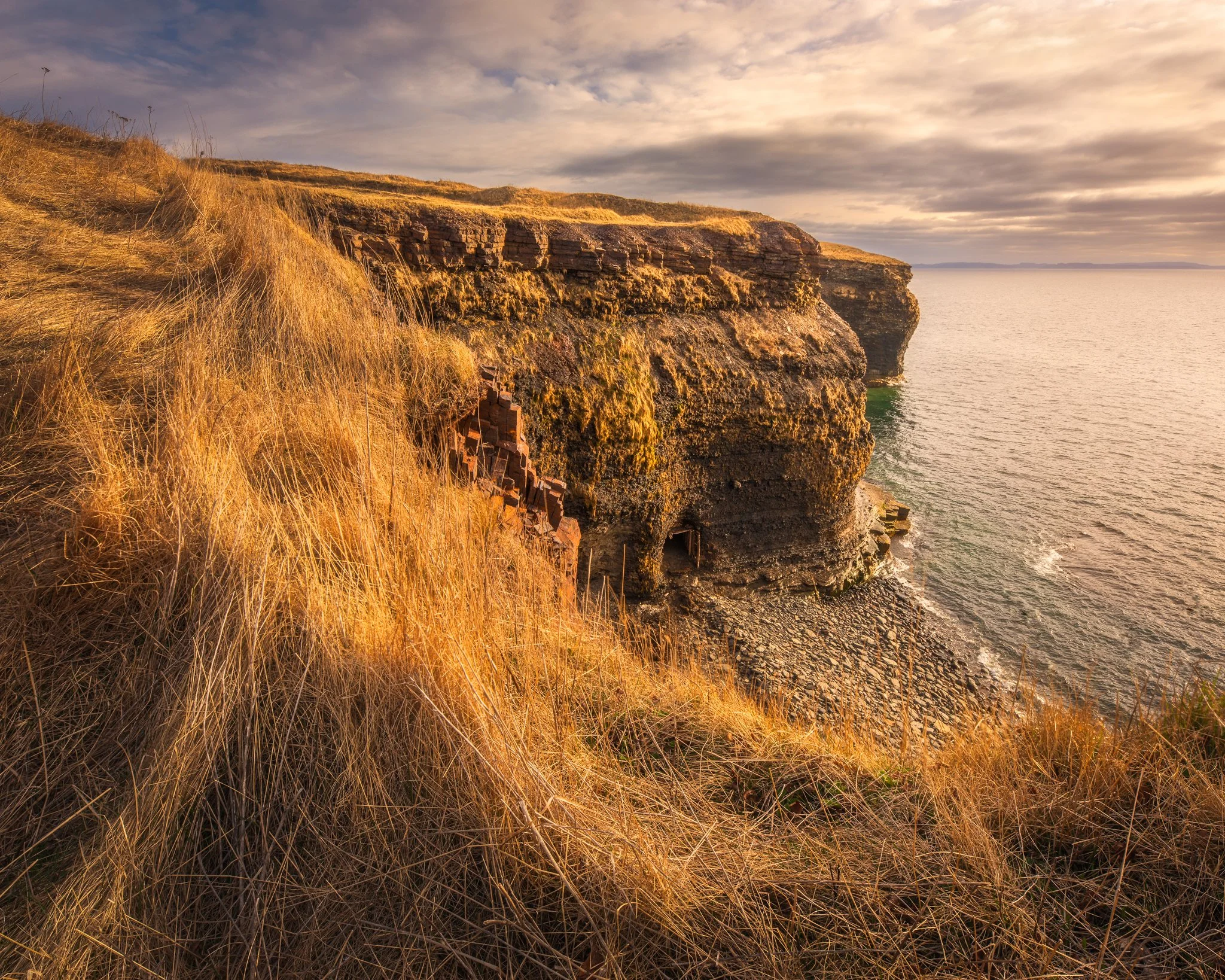
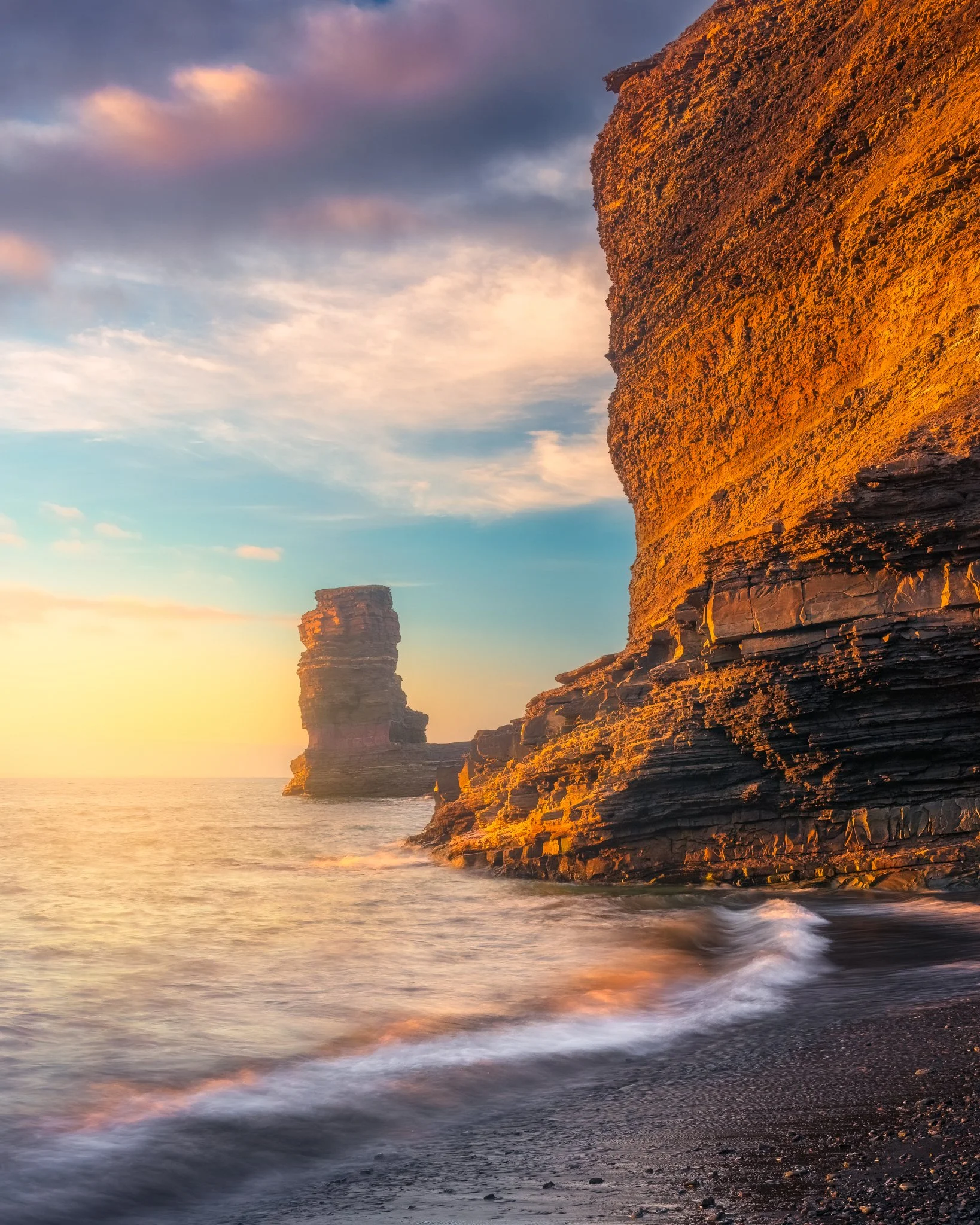
Between the top down views and the beach access, it’s one of the more versatile spots on Bell Island, and one that’s worth spending time exploring from both angles.
Fogo Island
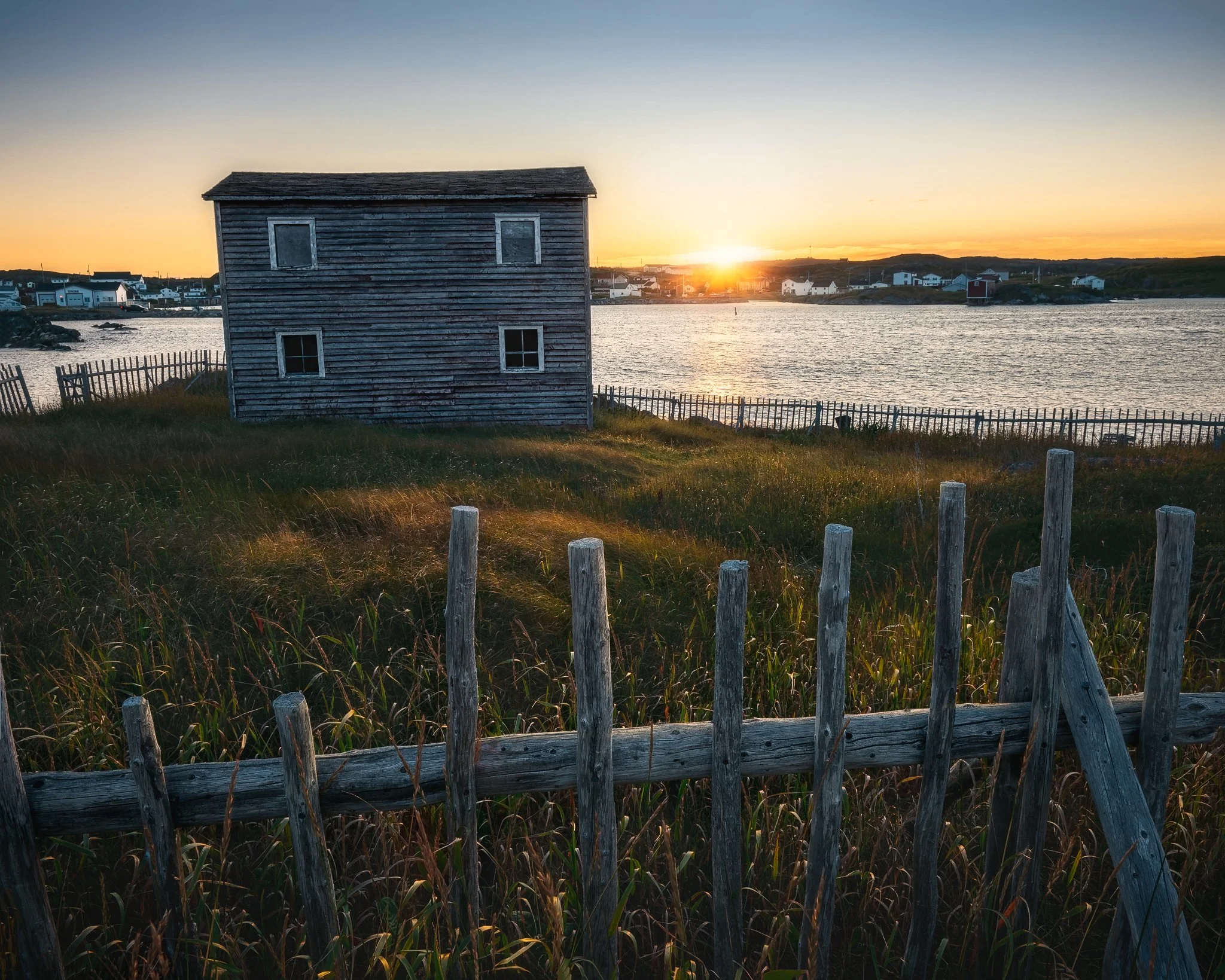
Tilting Fogo Island
Fogo Island sits off the northeast coast of Newfoundland. You reach the island by ferry from Farewell on the hange Islands route. It stands out as one of the strongest locations in the province for outport photography. This isn’t a place defined by dramatic cliffs or sea stacks but by weathered fishing stages, simple wooden homes, and quiet harbours that feel largely unchanged. The island has a clean, minimal quality to it. You’ll find small structures sitting alone on the shoreline, often painted in reds and muted tones. It’s a place where composition becomes more about simplicity rather than complexity.
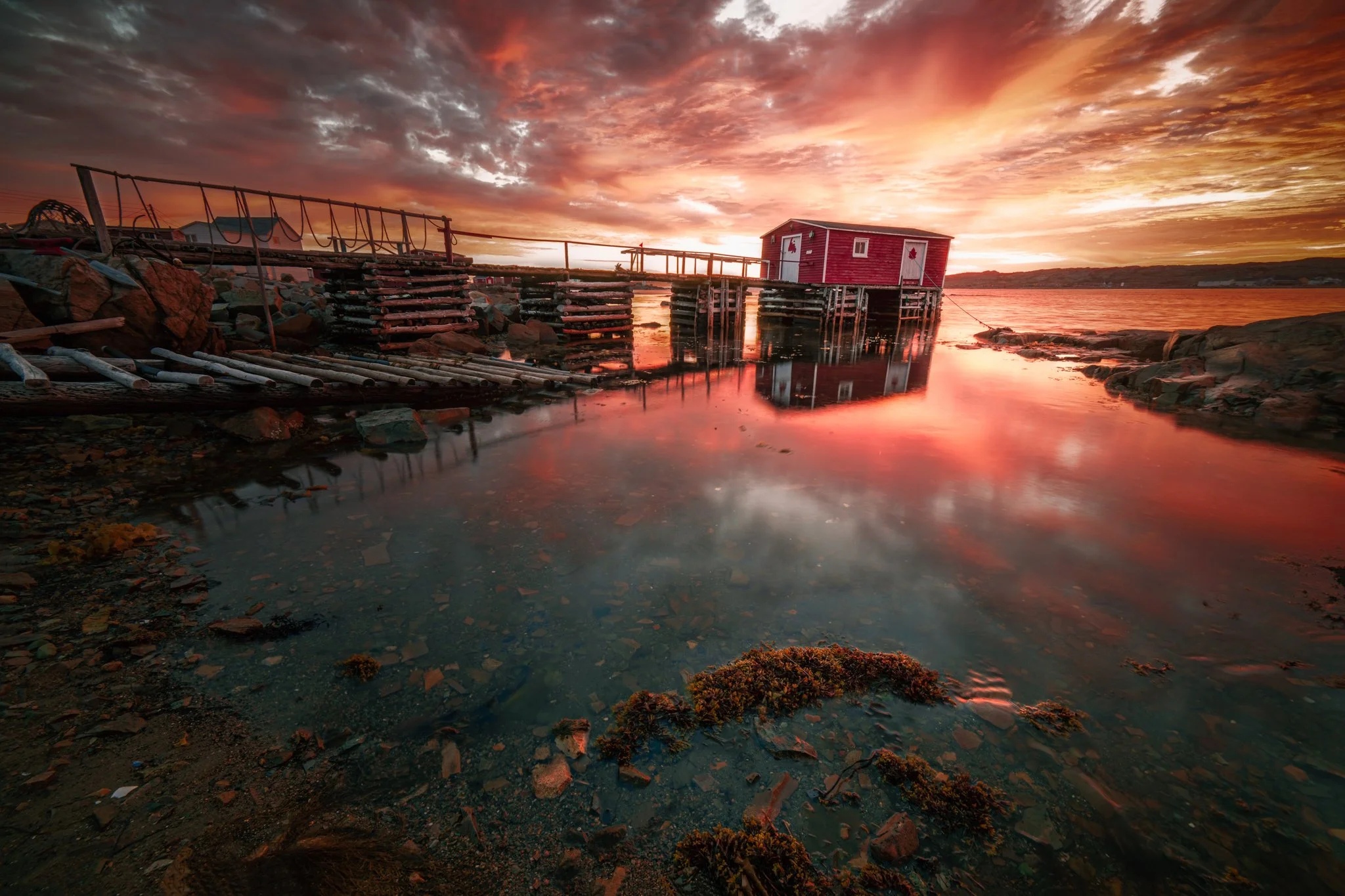
Joe Batt’s Arm
Fogo Island works well in calm conditions that open up reflections in the harbours, giving you near perfect symmetry with stages and boats sitting quietly on the water.
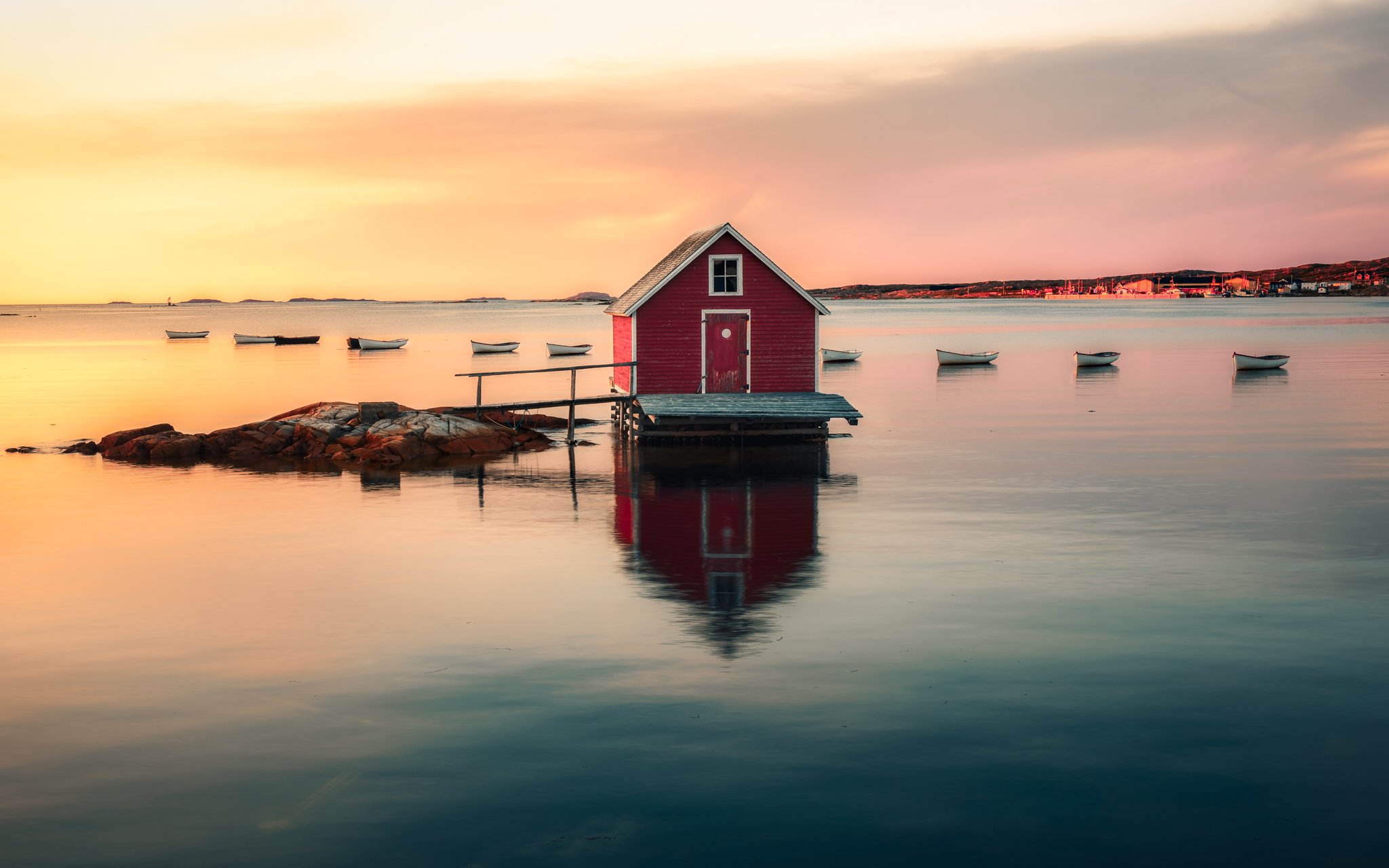
Available in Print Joe Batt’s Arm
Blue hour is especially strong here, with soft tones and colours that suit the simplicity of the scenes.
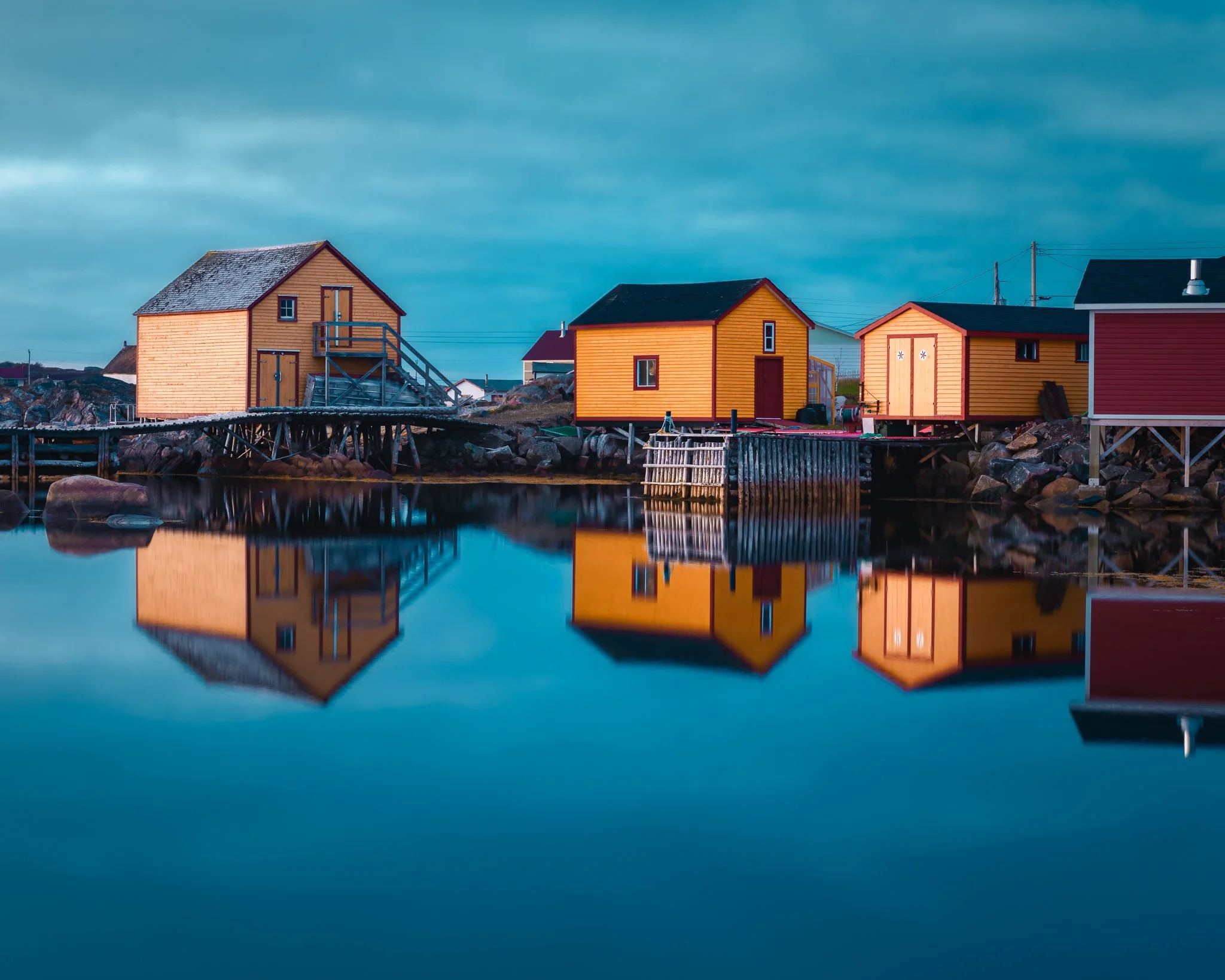
Tilting Fogo Island
At sunrise and sunset, warm light wraps around the buildings and foreground rock, adding just enough depth without overpowering the subject.
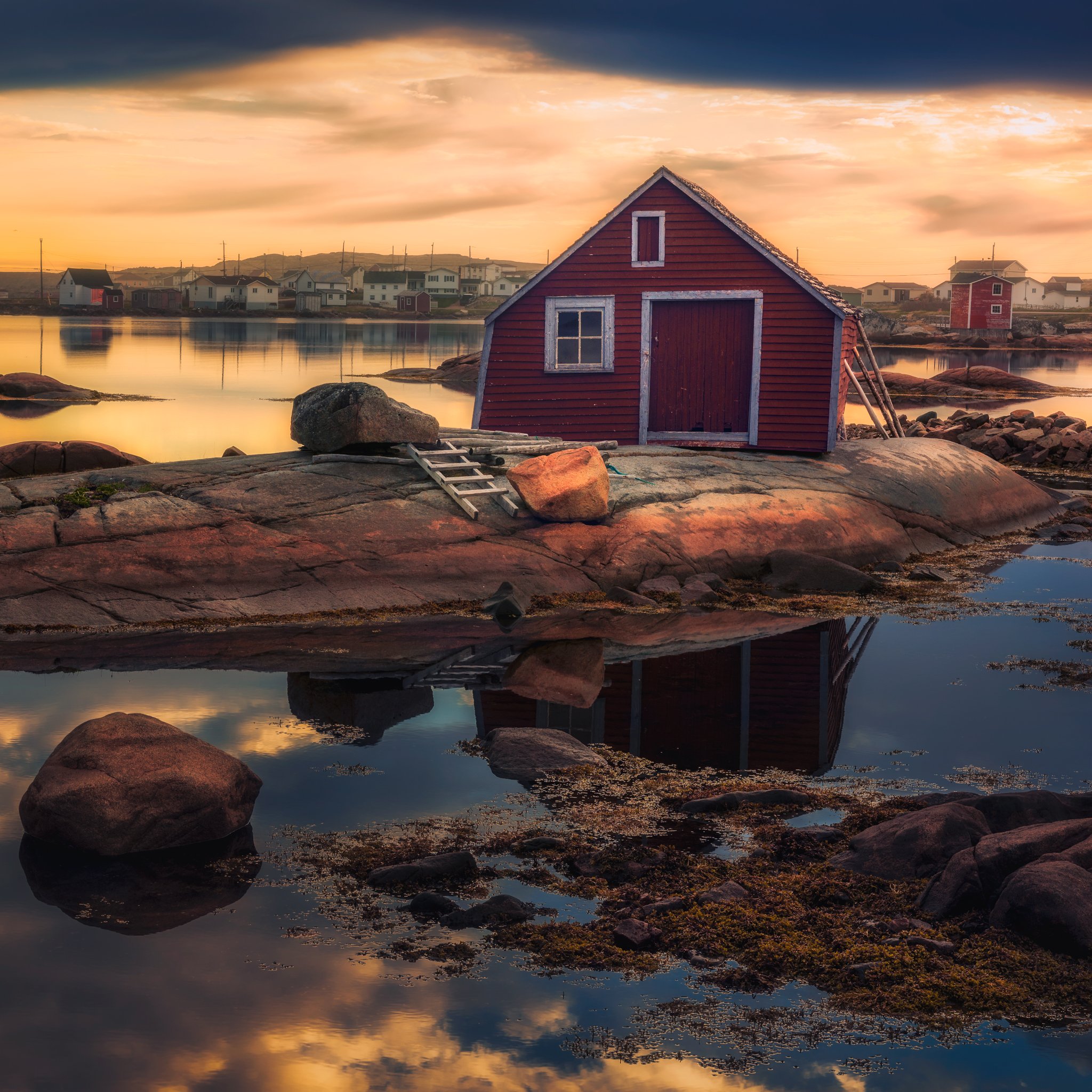
Tilting Fogo Island
There’s also a modern contrast throughout the island with the Fogo Island Inn and artist studios. They are clean, geometric structures set against the rugged landscape. This gives you something different to work with compositionally.
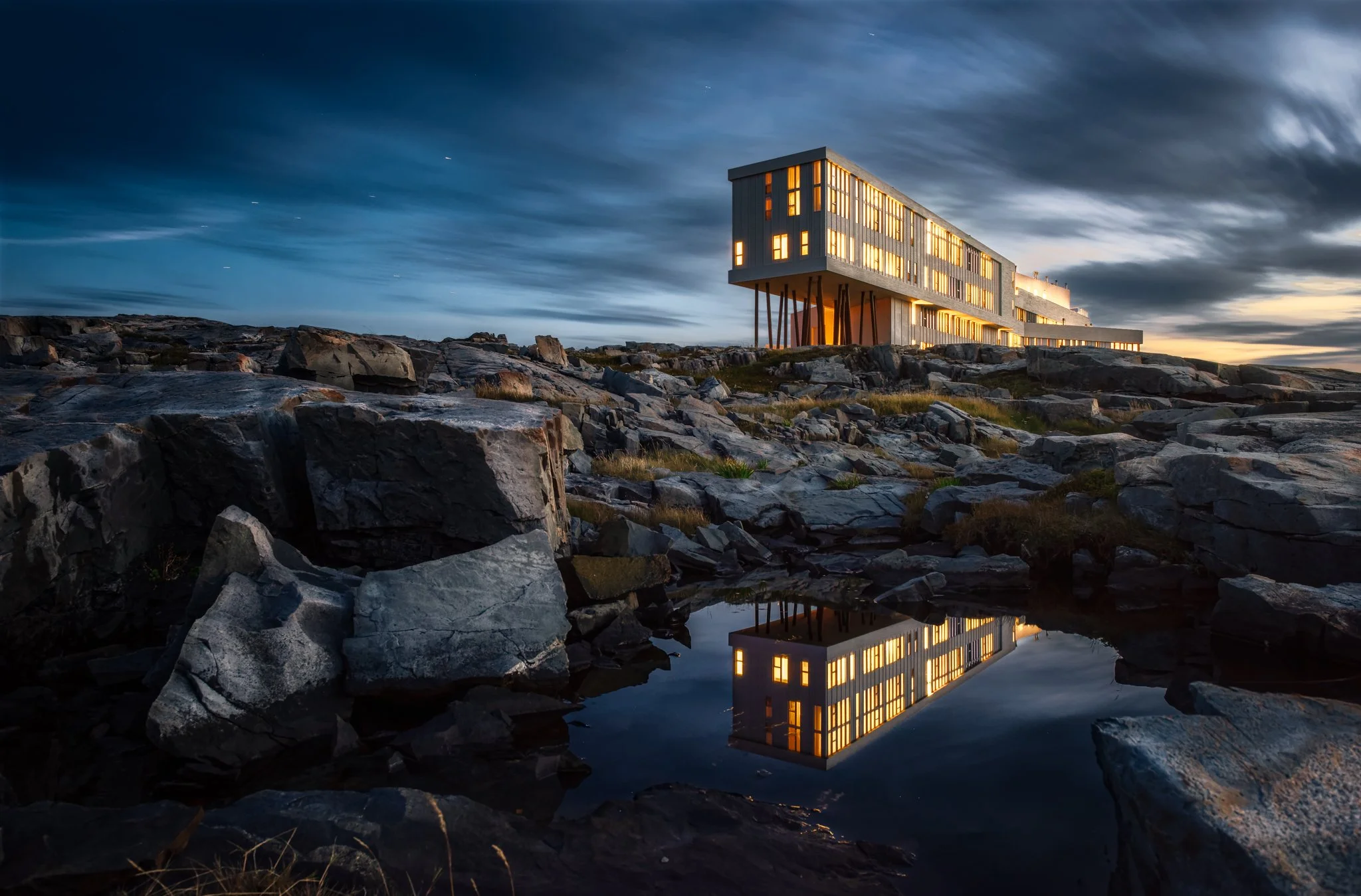
Overall, it’s a location that rewards patience and a slower approach. You’re not chasing dramatic moments as much as you’re refining simple scenes, letting light, colour, and structure come together in a way that feels quiet and deliberate.
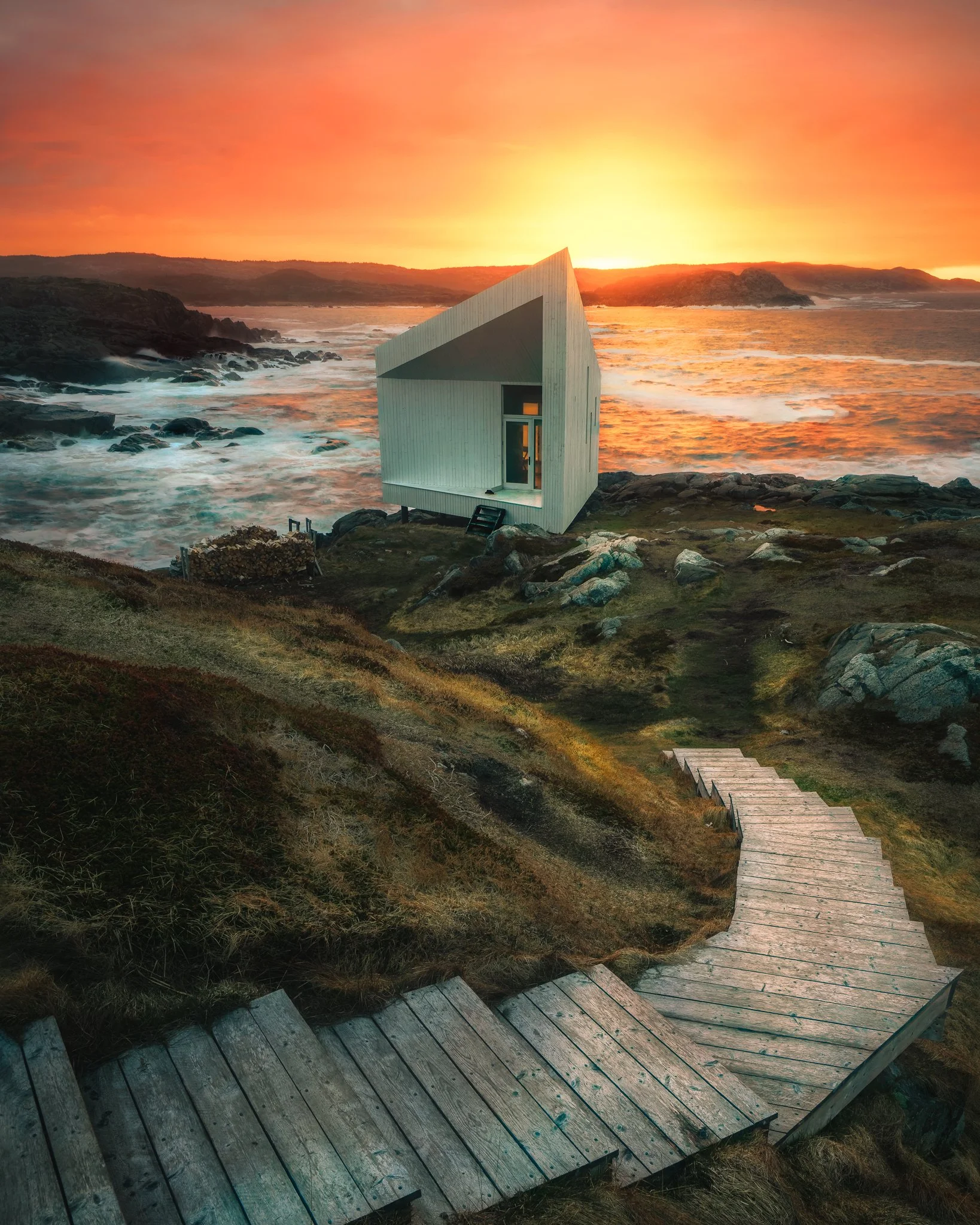
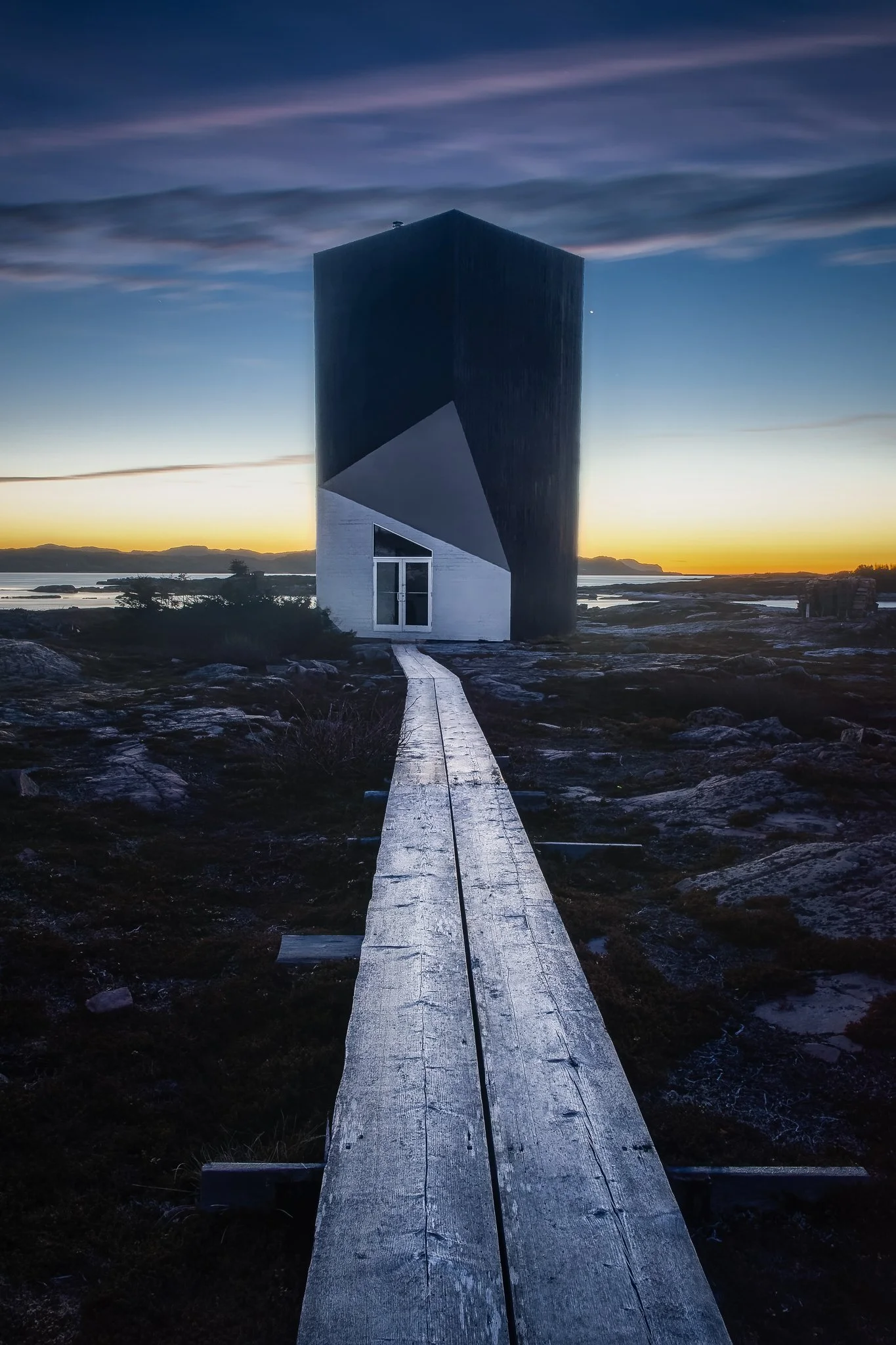
Twillingate Island
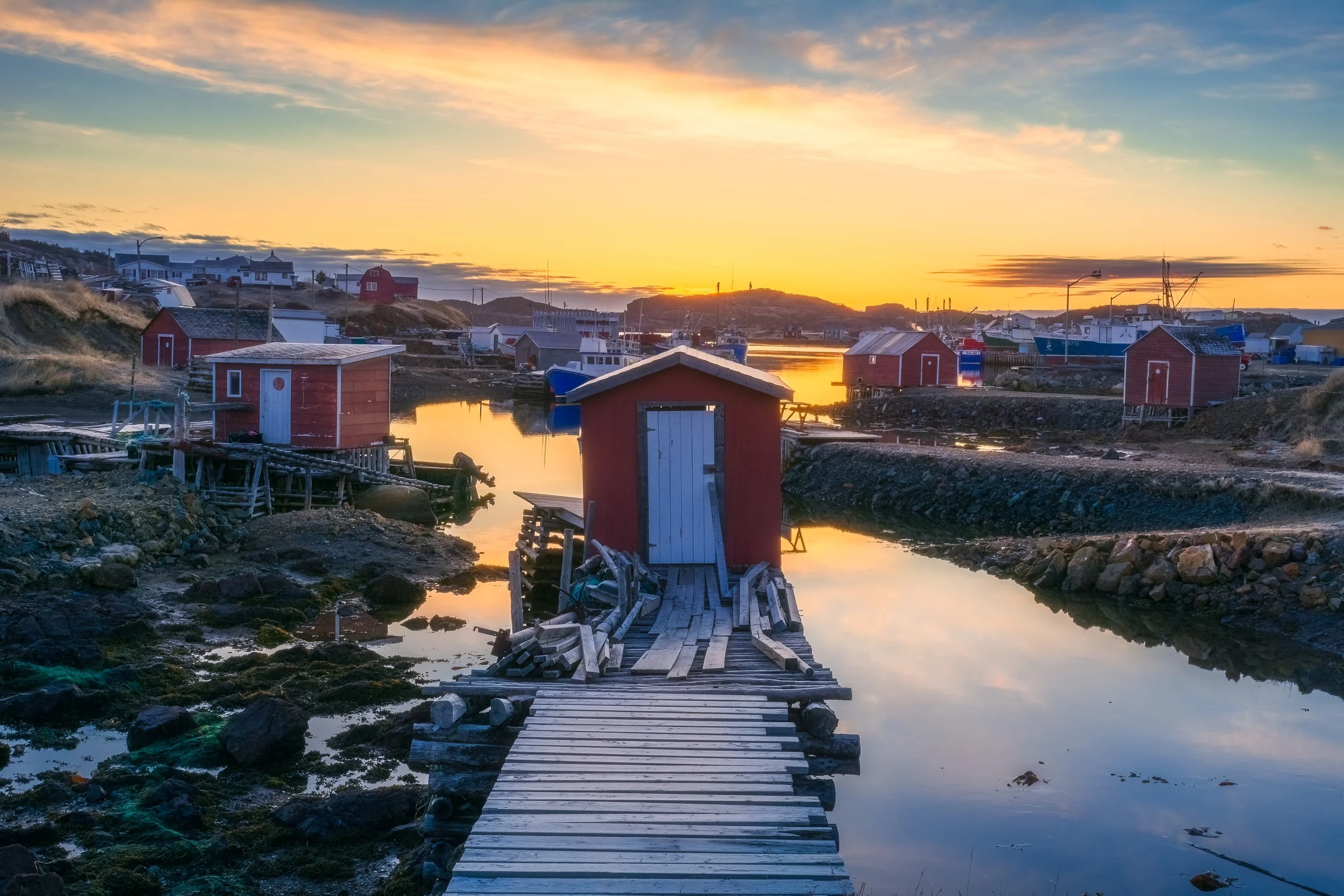
Twillingate Island is found on the north eastern coast of Newfoundland. It is connected to the mainland by a series of causeways located in Notre Dame Bay. Twillingate Island is one of the most reliable places in Newfoundland if you’re looking for a variety of subjects. It is especially fruitful for Newfoundland Iceberg photography and outport scenes.
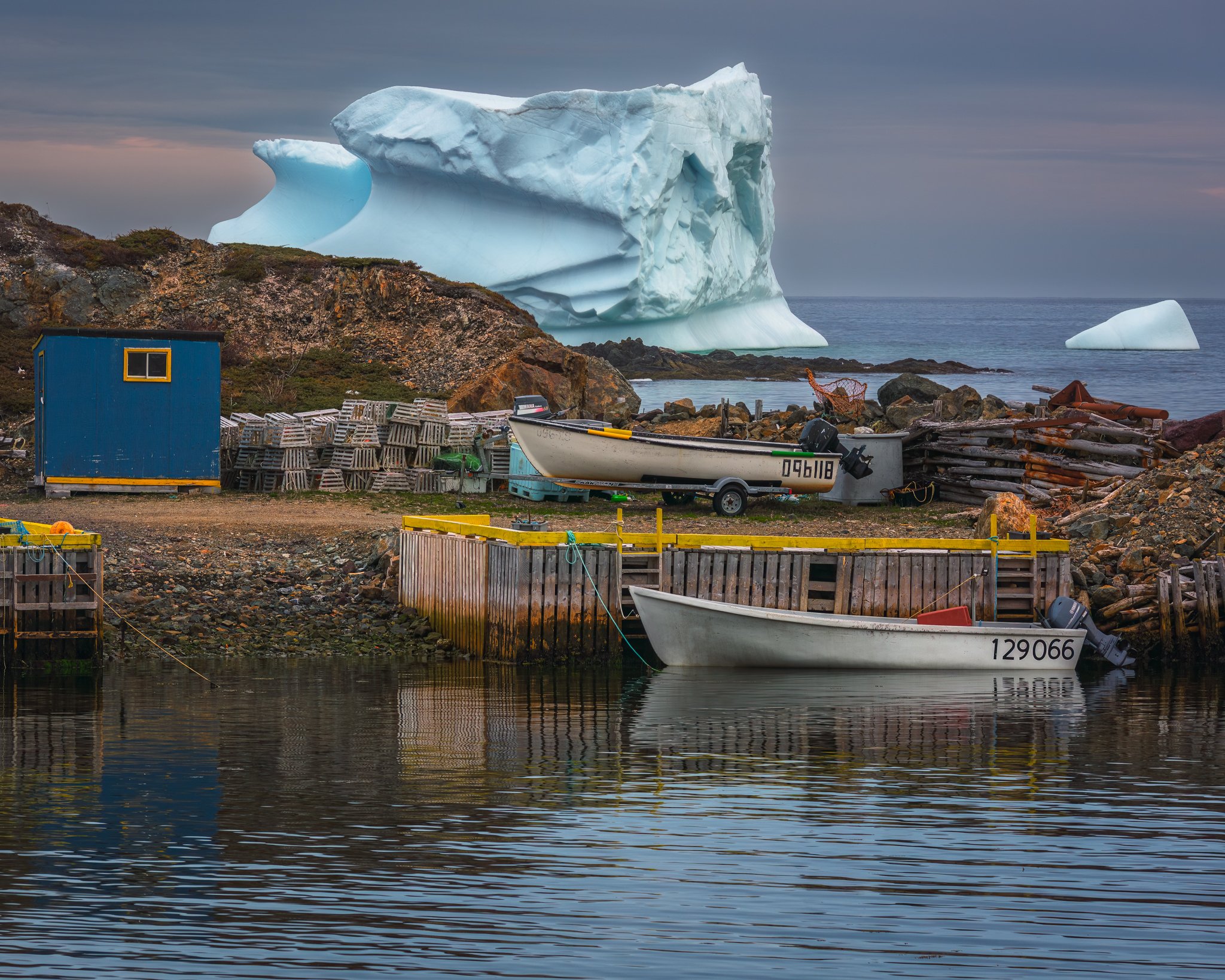
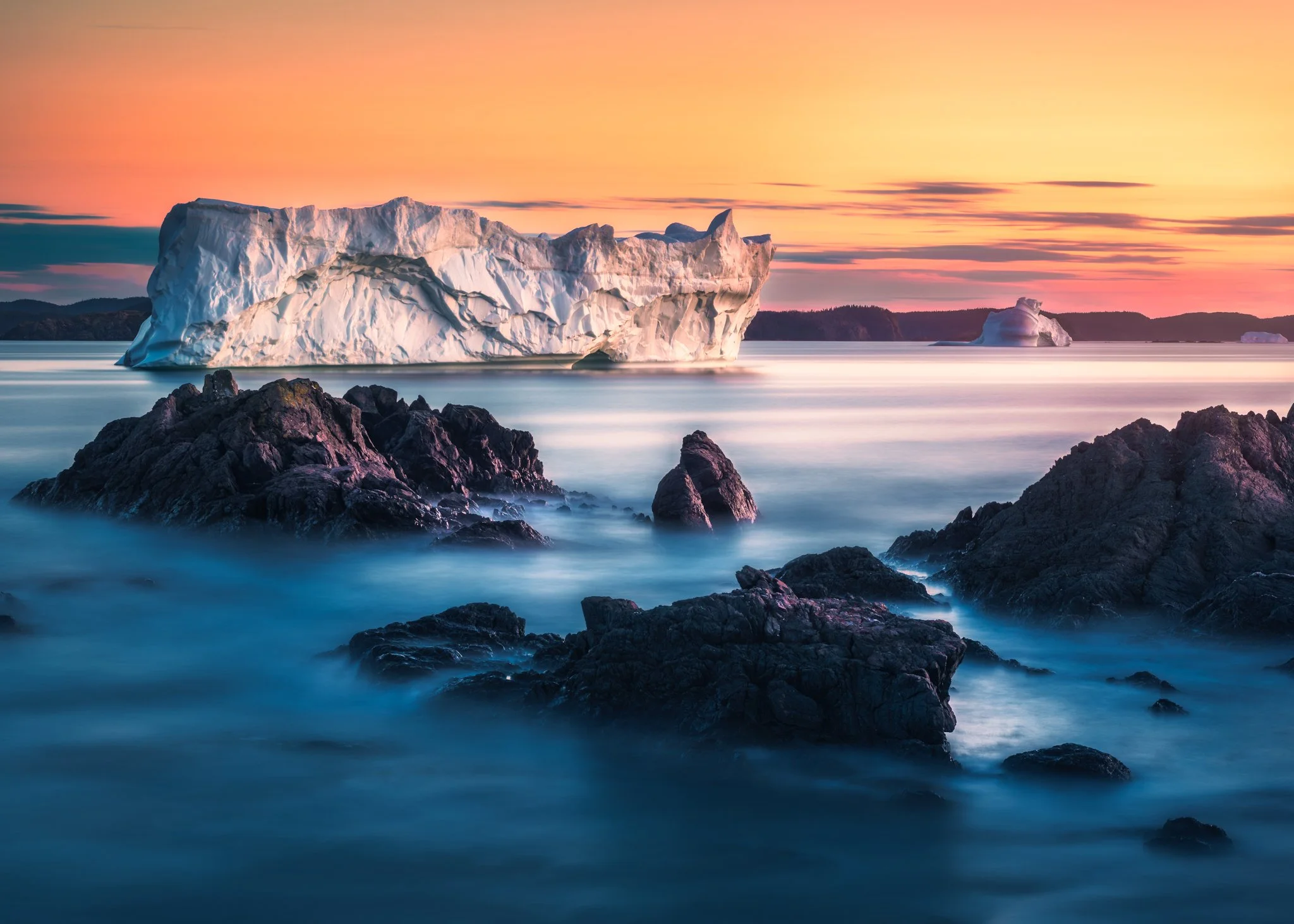
If you want to maximize the variety of scenes to capture, Iceberg season is the time to be there. Iceberg seasons occurs during late spring to early summer. Icebergs move through the channels and sit just offshore. Sometimes they are close enough to allow for a simple clean composition or you can include the surrounding coastal landscape. What makes it strong is how easily you can combine them with the landscape that include rocky shorelines, small coves, and outport elements. The latter can include stages, sheds, and boats that give the scene scale and context. In June you start to get that balance where the land is greening up and there’s still a good chance of icebergs to include.
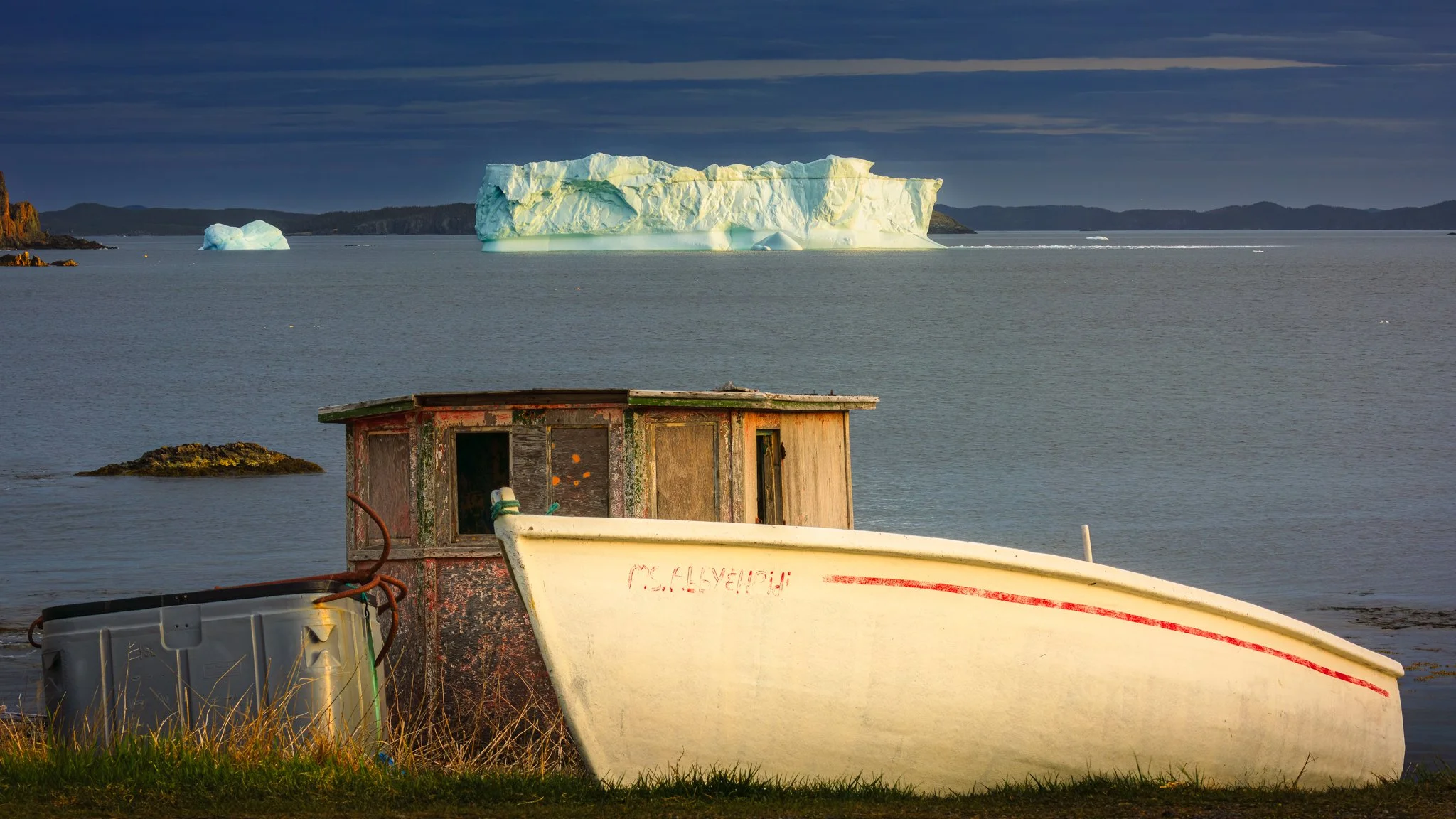
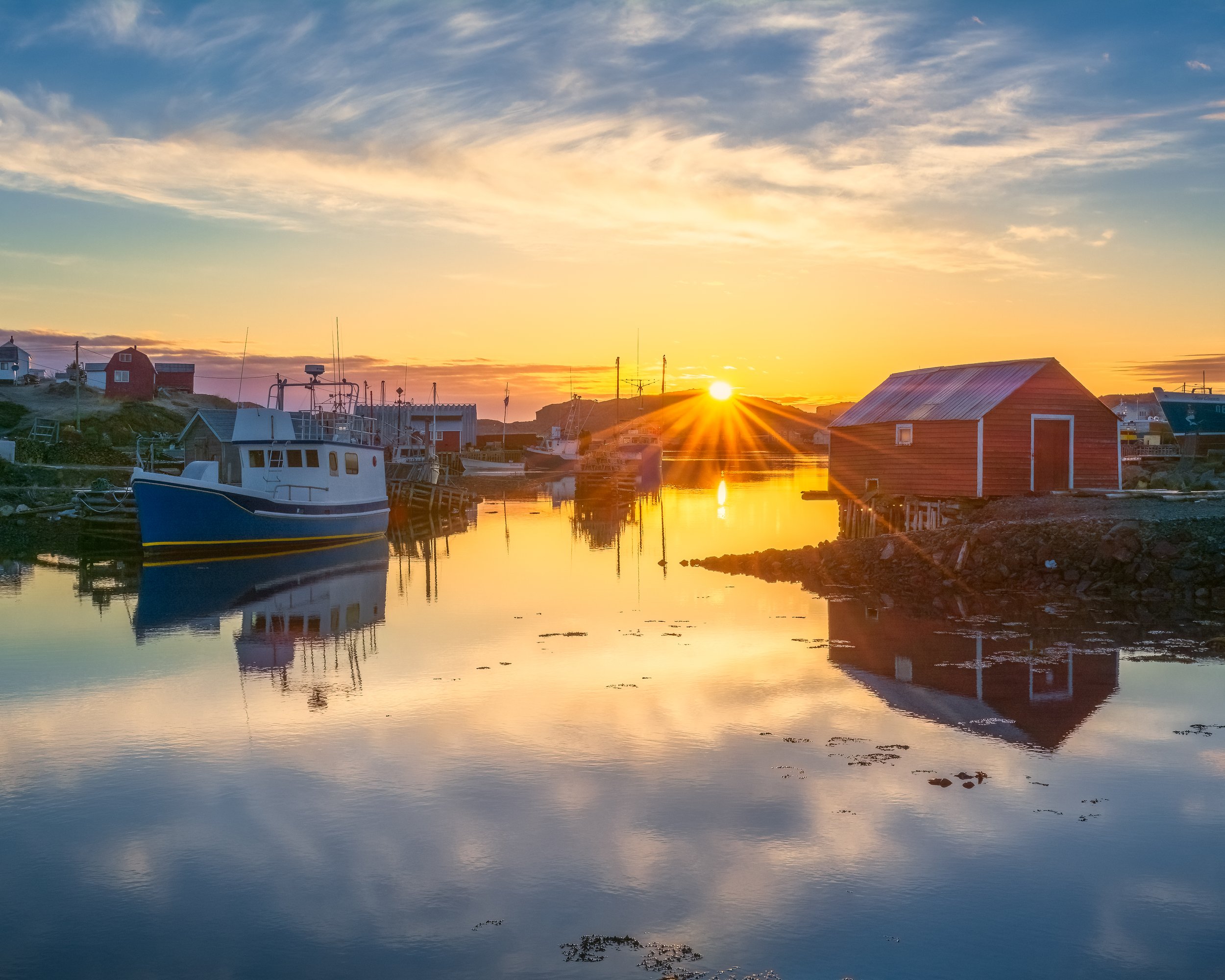
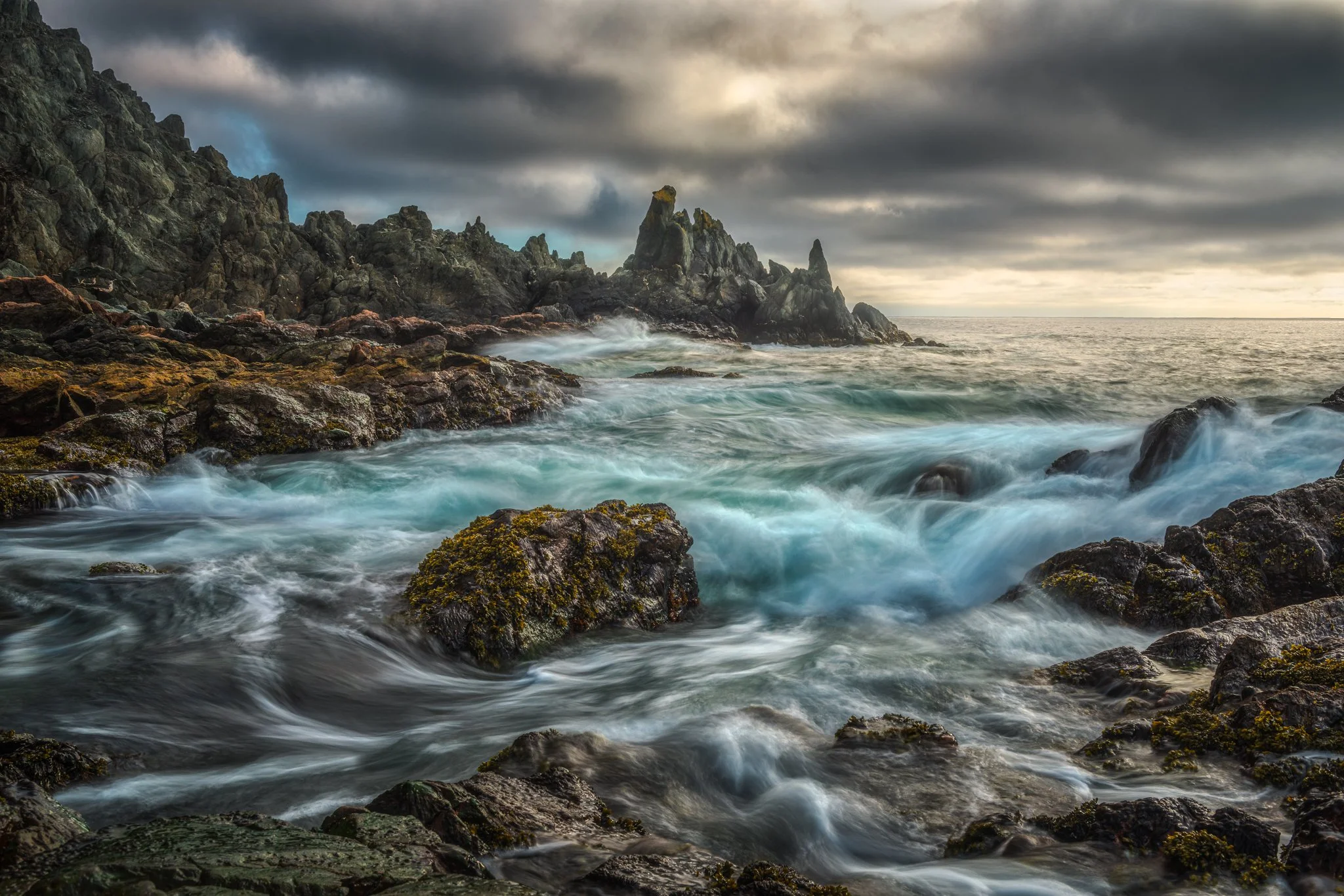
If the icebergs are not around, there’s still more than enough to work with. Twillingate has a mix of rugged coastline and quieter harbour scenes. Both make strong subjects in different conditions. You can shoot long exposures of waves rolling over the rocks, or slow things down in sheltered areas where the water goes calm and reflections start to show.
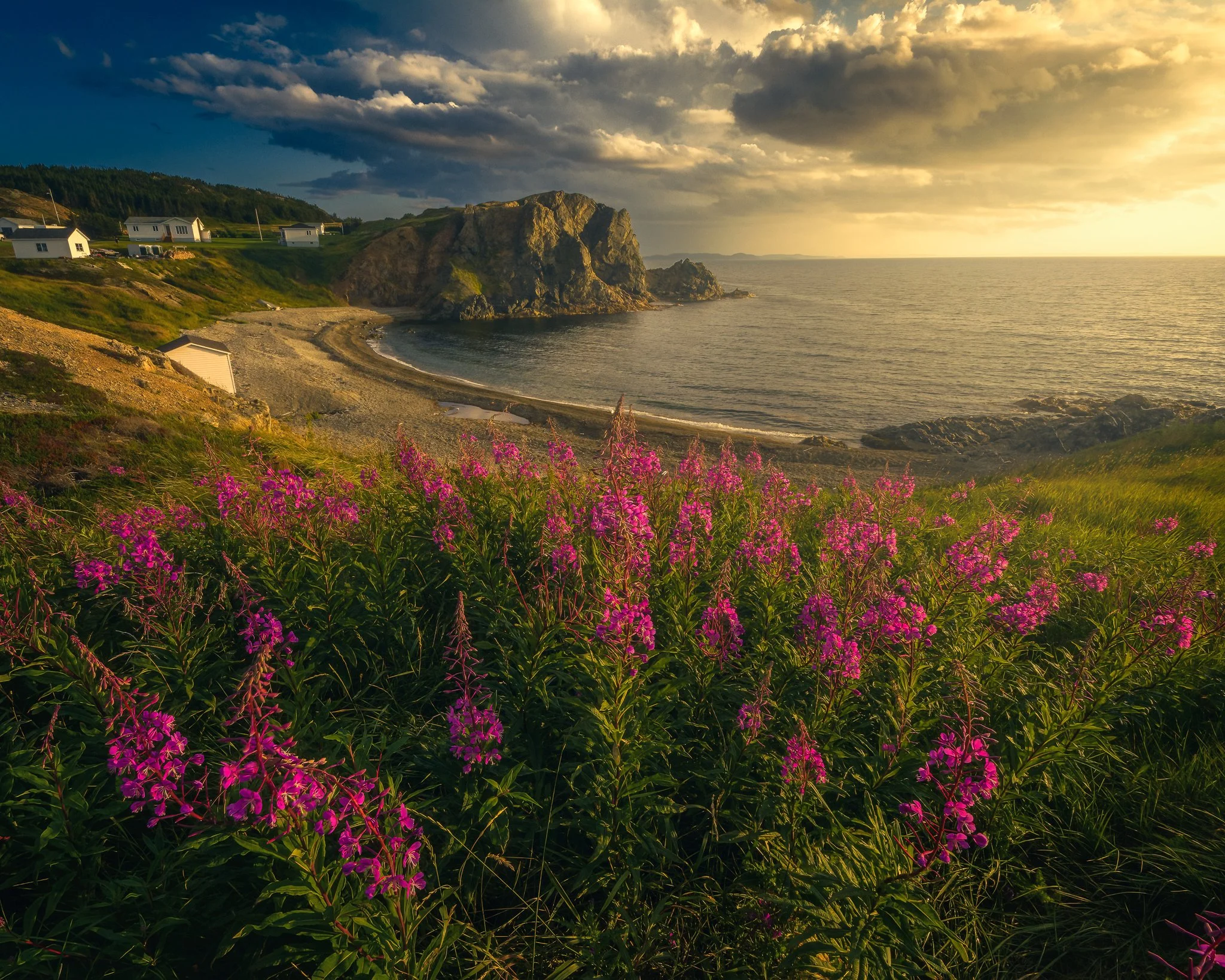
Blue hour works well in the small communities, with soft light, still water, and a bit of glow from buildings along the shore. Through the summer, the added greenery and wildflowers help build out your foregrounds and soften the harsher edges of the coastline.
Winter can be worth it too when the conditions line up. The snow adds contrast to the stages and shoreline. If you don’t get the sunrise or sunset light, blue hour is a great option to save a shot.
Final Thoughts
You don’t need to chase every location in Newfoundland to get good images. A handful of strong locations that have places with good structure, reliable light, and multiple compositions will take you further than constantly moving on to somewhere new.
Go back to the same places. Let the weather, seasons, and light change the scene. That’s where the better images usually come from. Fog, wind, calm water, or shifting skies can completely transform a location you’ve already shot.
If want strong Newfoundland photos, consistency sometimes matters more than coverage. Spend time learning a place, understanding how it reacts to conditions, and refining your compositions. Over time, that approach will give you stronger images than simply trying to see everything all at once.
Overall, it’s a place where you can keep things simple or build more layered compositions, it just depends on the season and conditions.
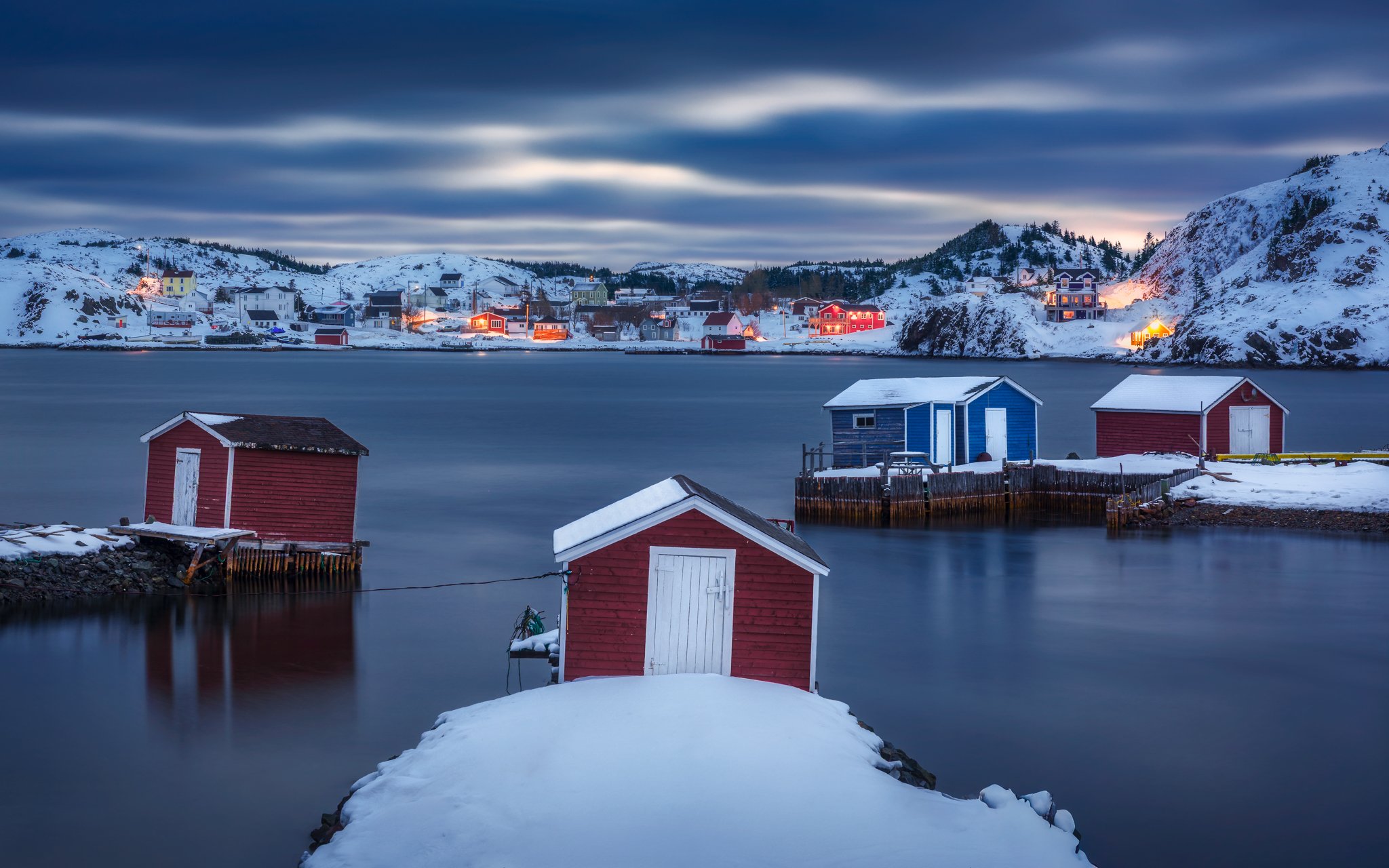
Available in Print Durrell Twillingate Island